
✕

Signs of post-cosmetic surgery complications to watch for when flying home

Date posted: 30-10-2026 | Last updated : 31-10-2026

Olivia Bennett, 38, from Melbourne, Australia asks: What signs of complications should I watch out for after flying home?

Doctor’s Answer:

Signs of post-cosmetic surgery complications to monitor when flying home include fever, a red/warm incision site, worsening pain, abnormal discharge, bleeding, swelling and pain in one leg, shortness of breath, or chest pain. These manifestations may be related to infection, hematoma, deep vein thrombosis (DVT), or pulmonary embolism (PE). Sudden shortness of breath, chest pain, coughing up blood, and fainting require immediate emergency care. Patients should inform their doctor about their surgical history and flight duration for appropriate evaluation and guidance.

Infection: Fever, a red and warm incision, worsening pain, or cloudy/foul-smelling discharge are signs that require contacting a doctor.

Bleeding, Hematoma: Rapidly swelling surgical area, tightness/fullness, spreading bruising, or continuous bleeding need medical evaluation.

Deep Vein Thrombosis: Swelling, pain, warmth, or redness in one leg following a long flight is a warning sign requiring urgent medical examination.

Pulmonary Embolism: Sudden shortness of breath, chest pain, coughing up blood, or fainting requires immediate emergency medical attention.

Proactive Care After Returning Home: Keep medical records, maintain communication with your surgeon, and seek local healthcare facilities upon detecting any abnormal signs.

1. Signs of Post-Cosmetic Surgery Infection to Watch Out For

Infection following cosmetic surgery can manifest as progressively increasing redness and swelling at the incision, severe pain, localized warmth, abnormal discharge, or a foul odor. Patients may also experience fever, chills, and fatigue. Early recognition of these signs aids in detecting complications and securing timely treatment.

Signs of postoperative infection to monitor include:
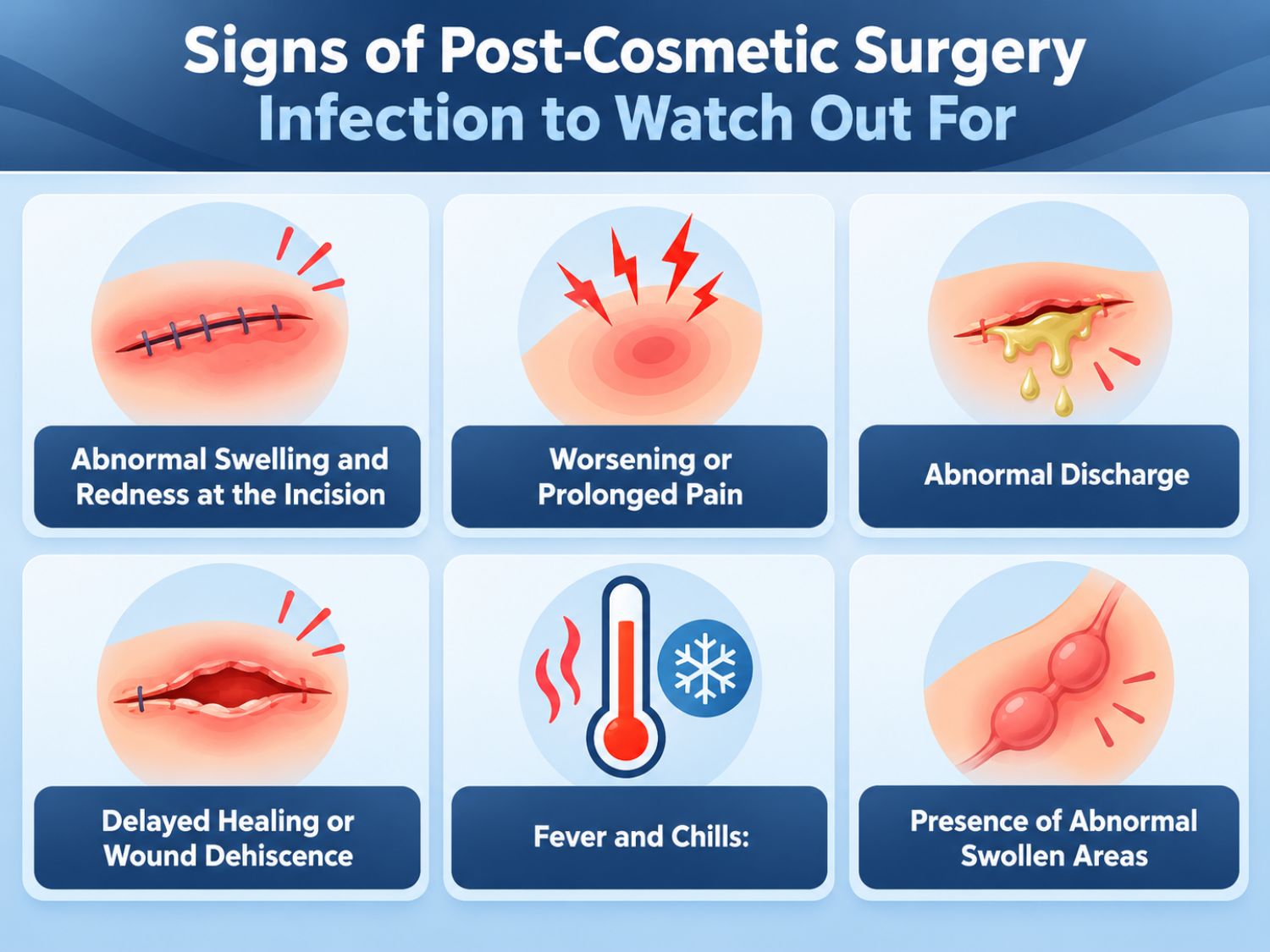
  • Abnormal Swelling and Redness at the Incision: The skin surrounding the wound becomes increasingly red, warm, and swollen, expanding rather than gradually subsiding according to the normal recovery progress.
  • Worsening or Prolonged Pain: Pain that becomes increasingly severe, does not subside despite taking prescribed medications, or recurs after showing initial improvement.
  • Abnormal Discharge: Cloudy, yellow, or green drainage, pus, or a foul odor from the surgical wound. This can indicate a localized bacterial infection.
  • Delayed Healing or Wound Dehiscence: Separation of suture lines, discoloration of surrounding tissue, or failure of the wound to improve over time.
  • Fever and Chills: A body temperature rising to 38°C (100.4°F) or higher, shivering chills, fatigue, or unusual lethargy.
  • Presence of Abnormal Swollen Areas: Development of fluid collection or an abscess around the surgical site, causing tension and tenderness to the touch.

After cosmetic surgery, patients should watch for increasing redness or swelling, worsening or persistent pain, unusual wound discharge, delayed healing, wound reopening, fever, chills, or abnormal lumps near the surgical site. These symptoms may indicate infection or other post-operative complications and require prompt medical evaluation.

The American Society of Plastic Surgeons (ASPS) notes that potential complications following cosmetic surgery include infection, hematoma, and thrombosis. For cosmetic surgery abroad, the organization emphasizes the importance of a structured plan for post-return monitoring, care, and complication management.

Source: https://www.plasticsurgery.org/news/briefing-papers/briefing-paper-cosmetic-surgery-tourism

2. Rapid Swelling, Spreading Bruising, or Bleeding May Signal Postoperative Hematoma

Hematoma is an accumulation of blood within tissues after surgery, which can cause swelling, tightness, and pain at the treated site. The severity of symptoms depends on the surgical location, the scope of the procedure, and the volume of accumulated blood.

Patients must pay attention to abnormal changes such as:

  • A surgical area that suddenly becomes rapidly swollen, rigid, or noticeably bulged.
  • Asymmetrical swelling where one side of the treated area is significantly larger than the other.
  • Rapidly spreading bruising with unusual changes in skin color.
  • A noticeable increase in pain that does not lessen following prescribed medication guidelines.
  • Heavy blood soaking through gauze dressings or persistent, continuous bleeding from the incision.

In cases of heavy bleeding, rapidly swollen/tight surgical areas, or if the patient experiences lightheadedness, pale skin, extreme weakness, or fainting, immediate emergency medical intervention is required. These may indicate significant blood loss or serious complications that demand urgent treatment.

After blepharoplasty, mild eyelid swelling, bruising, and redness along the incision lines may occur during the early healing period. However, rapidly increasing swelling, worsening pain, spreading redness, unusual discharge, or changes in vision require prompt medical evaluation to rule out potential complications.

3. Other Abnormal Signs at the Surgical Site That Should Not Be Ignored

In addition to infections, bleeding, and thrombosis, patients need to monitor localized changes at the surgical area. Every cosmetic procedure possesses unique recovery profiles and complication risks; therefore, actual symptoms should be cross-referenced with the surgeon’s post-op instructions.
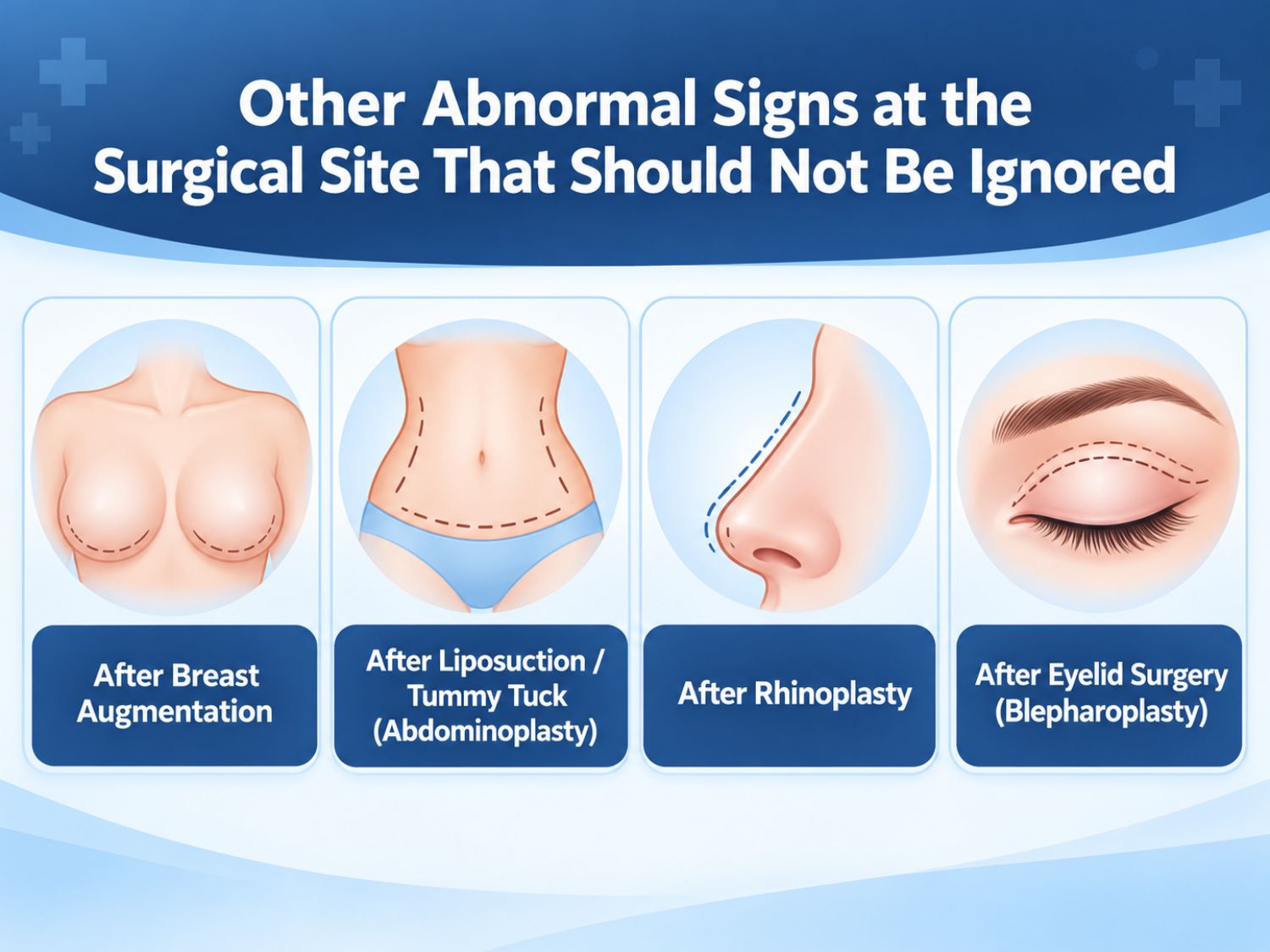
  • After Breast Augmentation: Sudden rapid swelling, tightness, or marked increase in pain in one breast; abnormal changes in shape between both sides; fluid discharge from the incision or signs of infection. If accompanied by shortness of breath, chest pain, or lightheadedness, emergency care is required.
  • After Liposuction / Tummy Tuck (Abdominoplasty): Rapidly increasing swelling and tightness in the abdominal or suctioned areas, severe pain, abnormal skin discoloration, or heavy bleeding/discharge from incisions. Shortness of breath, chest pain, or fainting post-surgery are signs demanding urgent emergency care.
  • After Rhinoplasty: A nasal area that becomes red, swollen, increasingly painful, yields abnormal discharge, or undergoes distinct skin discoloration requires medical evaluation. If signs of skin necrosis or visual changes occur, do not delay seeking medical examination.
  • After Eyelid Surgery (Blepharoplasty): Severe eye pain, rapidly increasing swelling, blurred vision, or sudden visual acuity loss require emergency evaluation, as these may signal conditions affecting the eyes and vision.

Different cosmetic procedures carry specific post-operative risks. After breast augmentation, liposuction, tummy tuck, rhinoplasty, or eyelid surgery, patients should monitor for unusual or worsening swelling, persistent pain, changes in surgical site appearance, fluid accumulation, bleeding, or delayed wound healing.

4. Normal Recovery Symptoms vs. Signs Requiring Medical Care: How to Differentiate?

Not every postoperative symptom indicates a complication. Swelling, bruising, dull aching, and fatigue are expected during the recovery phase. Following a long-haul flight, patients may also experience lethargy, muscle stiffness, or slight ankle swelling due to prolonged sitting.

Symptoms that may occur during normal recovery:

  • Swelling and bruising around the surgical area that gradually subside over time.
  • Dull aching or tightness within the levels described in the doctor’s guidance.
  • General fatigue following surgery and air travel.
  • Mild bilateral ankle swelling after sitting for long periods, which resolves with light movement and posture changes.

Signs that require medical evaluation:

  • Progressively worsening pain, severe pain, or pain that fails to improve under prescribed treatment instructions.
  • Surgical areas that swell rapidly, feel rigid, or show expanding bruising.
  • Fever, chills, a red and warm incision, purulent discharge, or an unusual odor.
  • Swelling, pain, warmth, or discoloration localized to one leg.
  • Shortness of breath, chest pain, coughing up blood, lightheadedness, or fainting.

5. What Should International Patients Do Upon Detecting Signs of Complications After Returning Home?

Once leaving Vietnam, patients may encounter difficulties in scheduling direct follow-up visits with their primary surgeon. Therefore, preparing comprehensive documentation and maintaining post-op communication lines is crucial, particularly if abnormal symptoms arise.

Provide Complete Surgical History. When consulting a local physician, patients should present:

  • The date of surgery and the exact name of the performed procedure.
  • Surgical location and details of implantable materials, if applicable.
  • Departure date, flight duration, and return date.
  • Current medications, allergy history, and relevant pre-existing medical conditions.
  • Onset time of symptoms and their progression to the current state.

Prepare Post-op Records. Patients should archive discharge papers, prescriptions, test/lab results, care instructions, implant details, and sequential photographs of the surgical wound over time. If treated at a local medical facility abroad, request copies of examination records, diagnostic results, and prescriptions to forward to the operating surgeon for coordinated follow-up monitoring when needed.
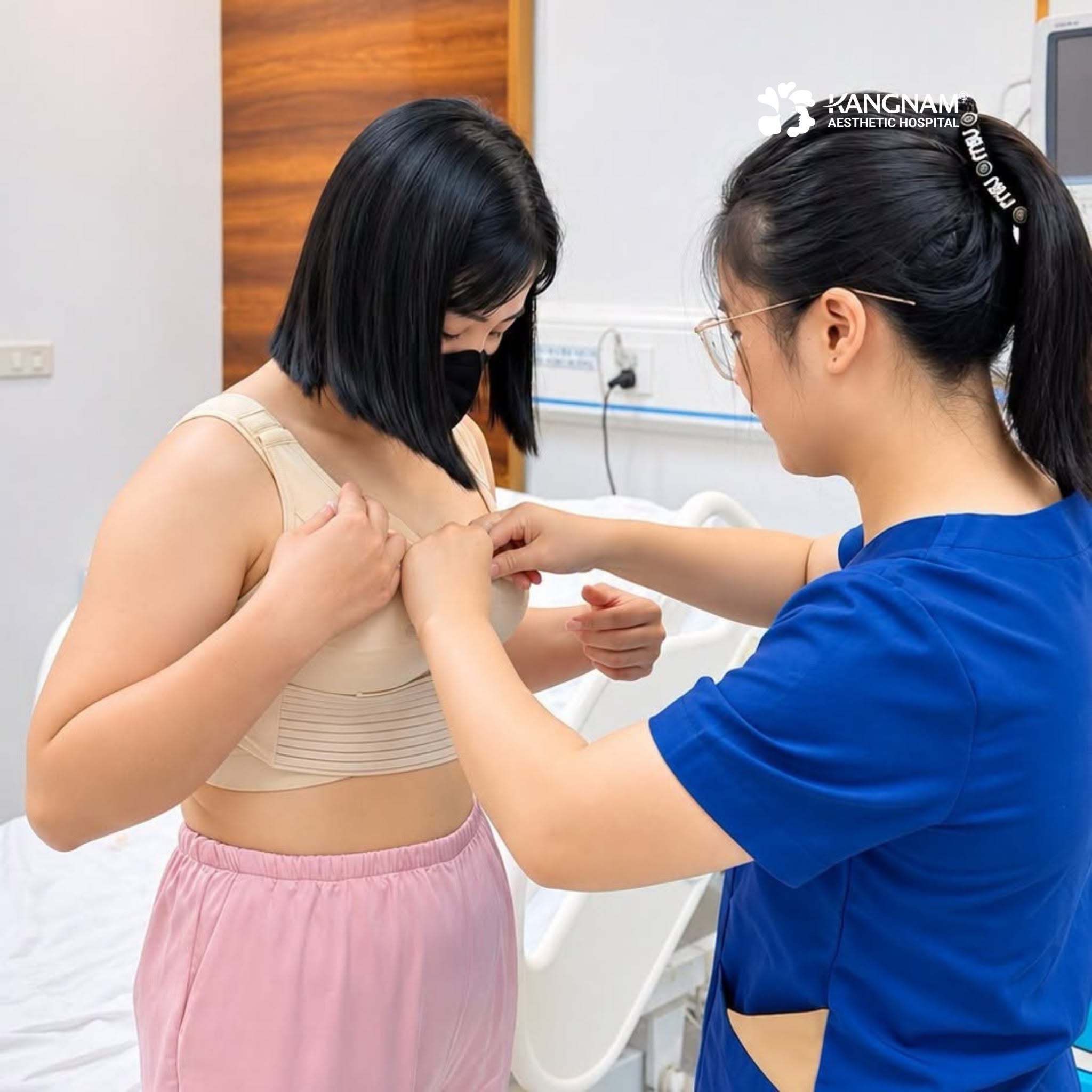
Following breast augmentation surgery, medical staff at Kangnam Aesthetic Hospital guide patients on properly wearing and adjusting a post-surgical compression bra to support the breasts during recovery. Following aftercare instructions and attending scheduled check-ups help monitor healing and identify potential complications early.

6. Frequently Asked Questions About Cosmetic Surgery Complications When Flying Home

How long after cosmetic surgery is it safe to fly home?

Following cosmetic surgery, a safe timeframe to fly home is typically 7–14 days for short-haul flights and 10–21 days or longer for long-haul flights. The specific timing depends on the type of surgery, scope of intervention, and individual recovery progress.

Does long-distance flying after surgery increase the risk of thrombosis?

Yes. Long-distance flying after cosmetic surgery can increase the risk of deep vein thrombosis (DVT) and pulmonary embolism (PE), particularly during the initial post-op weeks. This occurs because the body is actively healing, while prolonged immobility in a seated position during flights slows blood circulation within the leg veins.

After returning home, can I visit a local doctor to have my surgical incision checked?

Yes. Patients can visit a local doctor or healthcare facility in their place of residence to check the surgical incision, assess for signs of infection, and manage any arising issues. Bring your surgical records, prescriptions, and care instructions so the local doctor has complete medical context. In the event of emergency symptoms, go to the nearest hospital immediately.

Best time of year to travel to Vietnam for surgery (weather, holidays)?

How do I book a consultation from abroad — online consult before flying?
Can I fly right after liposuction / breast augmentation?

Messenger