
Date posted: 13-11-2026 | Last updated : 13-11-2026
Liposuction in Vietnam costs approximately 22,000,000–94,000,000 VND (863–3,686) for the listed core procedures at Kangnam Aesthetic Hospital, depending on the treatment area, technique, and surgical complexity. Liposuction can be performed safely when patients are carefully screened, surgery is carried out by qualified plastic surgeons at appropriately licensed medical facilities, and postoperative care is properly managed.
Safety: The surgeon’s qualifications, preoperative assessment, anesthesia support, and postoperative monitoring are more important than price alone.
Technology: Kangnam describes using VASER ultrasound-assisted liposuction and Lipo 360 body-contouring techniques.
Recovery: Swelling and bruising are expected after surgery; the final contour develops gradually over several months.
At Kangnam Aesthetic Hospital, liposuction prices range from 22 million to 94 million VND (863–3,686) for the listed core procedures, with separate charges for certain technologies or additional treatments. The final cost depends on the treatment area, amount of fat requiring removal, surgical technique, and individual body-contouring plan.
| Liposuction Service | Price (VND) | Estimated Price (USD) |
| Thigh Liposuction (M1) | 66,000,000 | $2,588 |
| Thigh Liposuction (M2) | 75,000,000 | $2,941 |
| Basic Liposuction | 54,000,000 | $2,118 |
| Standard Liposuction | 64,000,000 | $2,510 |
| Lipo 360 – Full Abdomen (71–80 kg): Upper Abdomen + Lower Abdomen + Waist | 74,000,000 | $2,902 |
| Advanced+ Liposuction | 94,000,000 | $3,686 |
| Mini Double-Chin Liposuction | 22,000,000 | $863 |
| Mini Arm Liposuction | 33,000,000 | $1,294 |
| Mini Liposuction – Single Area | 45,000,000 | $1,765 |
| Mini Liposuction – Multiple Combined Areas | 24,000,000 | $941 |
| VASER 6D Hydro-Mist Technology | 13,000,000 | $510 |
| Abdominal Wall Muscle Tightening / Contouring | 12,000,000 | $471 |
Important pricing notes:
The final liposuction cost is determined by the treatment area, fat distribution, skin condition, surgical complexity, technology used, and additional medical services. Two patients requesting abdominal liposuction may receive different quotations even when their body weight is similar.
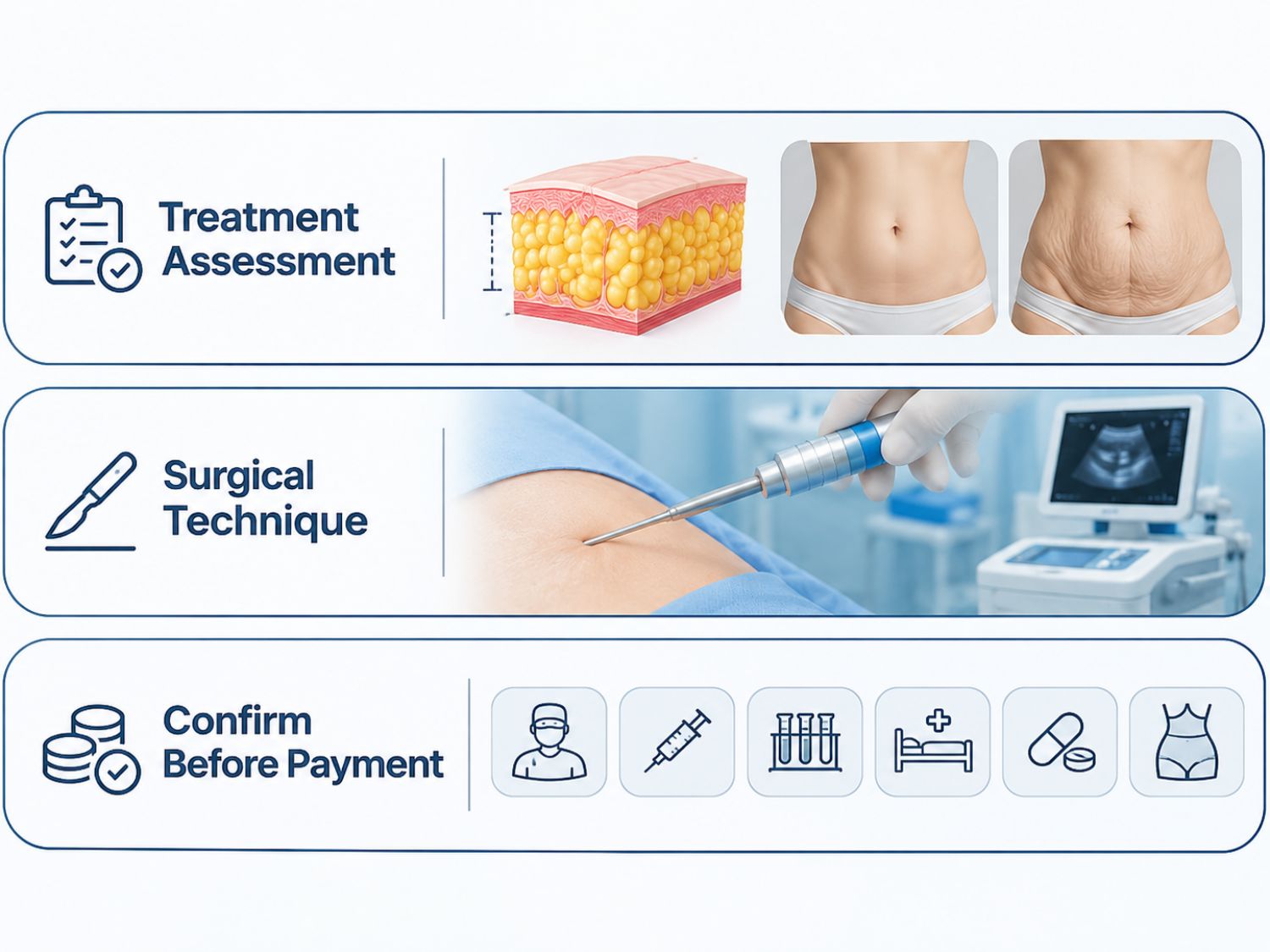
Removing fat from a small area, such as the double chin, involves a different surgical approach from contouring the abdomen, waist, back, or thighs.
The surgeon must evaluate:
Example: Two patients weighing 75 kg may have very different treatment needs. One may have localized abdominal fat with firm skin, while another has abdominal fat combined with significant loose skin following pregnancy.
The first may be suitable for liposuction alone. The second may need an alternative or additional skin-tightening procedure, which changes both the treatment plan and the cost.
Basic, Standard, and Advanced+ liposuction are separate pricing categories at Kangnam. The exact differences in equipment, treatment scope, anesthesia, and included services should be explained in a written quotation.
Additional technologies or procedures may also affect the final bill. For example, ultrasound-assisted fat removal and abdominal muscle tightening address different aspects of body contouring and should not be considered interchangeable.
A complete quotation should clarify whether the following are included:
Doctor’s advice: Always request an itemized quotation after the medical assessment rather than comparing advertised prices alone. This makes it easier to understand the total financial commitment before booking international travel.
For more information, see Kangnam’s liposuction pricing guide.
Liposuction in Vietnam can be a safe body-contouring option for appropriately selected patients, but it remains an invasive surgical procedure with potential complications. Safety depends on the patient’s health, the qualifications of the surgical team, the amount of tissue removed, and the ability of the medical facility to prevent and manage complications.

International medical reference: American Society of Plastic Surgeons – Liposuction Risks and Safety.
Liposuction is best suited to generally healthy adults who have localized fat deposits, reasonably elastic skin, and realistic expectations about body contouring. It is not a treatment for obesity and does not replace long-term weight management.
Liposuction may be appropriate for patients who:

For instance, a patient who exercises regularly but cannot reduce a localized lower-abdominal fat deposit may be a suitable candidate for targeted liposuction.
However, the fat must be located beneath the skin. Liposuction does not directly remove the deeper fat surrounding internal organs, commonly called visceral fat.
Surgery may need to be postponed or avoided in patients with:
Smoking and nicotine use can also interfere with tissue healing. Patients should discuss nicotine use, prescription medications, supplements, and previous medical problems with their surgeon.
Liposuction treatment follows three main stages: medical assessment, surgical fat removal, and monitored recovery. Each stage contributes to both the aesthetic outcome and the patient’s safety.
At the initial consultation, the surgeon evaluates the patient’s health and identifies the areas requiring treatment.
The assessment may include:

The surgeon then determines the treatment plan and whether the patient is medically fit for surgery.
Important: Do not independently stop prescription medications, particularly blood thinners, before surgery. Any changes must be coordinated with the prescribing doctor and surgical team.
The procedure begins with appropriate anesthesia, selected according to the extent of surgery and the patient’s medical condition.
The surgeon makes small access incisions and introduces the necessary fluid solution into the targeted fatty layer. The fat is then loosened and removed using the planned surgical technique.
Throughout the procedure, the medical team monitors relevant vital signs, fluid management, and the patient’s condition.
The operation ends after the surgeon has assessed the contour and determined that further fat removal is unnecessary or unsafe.
Patients are monitored following anesthesia and receive individualized postoperative instructions.
During the initial recovery period, the following are common:
A compression garment is commonly recommended for several weeks to help manage swelling and support the healing tissues. The exact wearing schedule depends on the surgeon’s instructions.
Gentle walking is usually encouraged once medically appropriate, while strenuous exercise and heavy lifting should be postponed until the surgeon confirms that recovery is adequate.
Normal postoperative discomfort should gradually improve rather than become increasingly severe.
Patients should seek urgent assessment for:
Chest pain, shortness of breath, or collapse require emergency medical care.
Liposuction in Vietnam may cost less than comparable procedures in the United States or Australia, but the savings depend on the treatment and provider. International patients should compare total expenses, including anesthesia, accommodation, travel, and postoperative care, rather than surgical fees alone.
VASER uses ultrasound energy to help loosen fat before extraction, which may offer technical advantages in selected cases. However, it also carries specific risks, including heat-related injury, and has not been proven to eliminate surgical complications compared with conventional liposuction.
Fat cells removed by liposuction do not grow back in the same way, but remaining fat cells can enlarge when body weight increases. Maintaining a stable weight through balanced nutrition and regular physical activity helps preserve the improved body contour.
Combining several treatment areas may be possible, but the decision depends on the patient’s health, expected total aspirate volume, operating time, and surgical risk. For extensive procedures, a surgeon may recommend separate sessions to reduce complications.
Liposuction requires small incisions to insert the surgical cannula, so minor scars are possible. These marks often become less noticeable over time, although healing varies according to skin characteristics, incision placement, and postoperative care.