Date posted: 13-11-2026 | Last updated : 18-11-2026
The American Society of Plastic Surgeons suggests waiting at least 5–7 days after body procedures such as liposuction before flying, but thigh liposuction, multiple treatment areas, and long-haul flights may require additional recovery time.
Arm liposuction: Flying may be considered around 7–10 days after surgery in selected patients with satisfactory recovery.
Thigh liposuction: Recovery can make walking and prolonged sitting uncomfortable; the appropriate travel date requires individual assessment.
Combined procedures: Treating both arms and thighs may require a longer stay and more postoperative monitoring.
Arm and thigh liposuction involve similar fat-removal principles, but recovery differs because the arms and legs perform different daily activities. Thigh liposuction may affect walking and sitting, while arm liposuction can make lifting, reaching, and carrying luggage uncomfortable.
Arm liposuction removes localized fat deposits, commonly from the upper arms.
During recovery, patients may experience:
Arm liposuction does not usually prevent walking, but patients should avoid heavy luggage and strenuous upper-body movements during early recovery.

Thigh liposuction may target the inner thighs, outer thighs, or other selected areas.
Common recovery concerns include:
Because the legs are essential for mobility and blood circulation, the surgeon must assess the patient’s ability to walk comfortably before approving travel.
Clinical example: A patient recovering from limited upper-arm liposuction may be able to walk normally within a few days but struggle with overhead luggage. Someone recovering from extensive inner-thigh liposuction may find prolonged sitting and walking through a large airport uncomfortable.
The recovery plan should reflect these practical differences rather than treating both procedures as identical.
Most patients experience the greatest discomfort during the first few days, followed by gradual improvement over several weeks. However, swelling may continue for months, and feeling well enough to perform daily activities does not automatically mean a patient is fit for international travel.
| Recovery Period | Arm Liposuction | Thigh Liposuction |
| Days 1–3 | Swelling, bruising, tenderness, restricted lifting | Swelling, bruising, discomfort when walking or sitting |
| Days 4–7 | Arm movement gradually becomes easier | Walking generally improves, but prolonged sitting may remain uncomfortable |
| Days 8–14 | Bruising and discomfort often decrease | Swelling and tightness may persist, particularly after extensive treatment |
| Weeks 3–4 | Many patients resume light daily routines | Mobility improves; activity restrictions depend on healing |
| Weeks 4–6 | Gradual return to more demanding activity with approval | Continued improvement in mobility and swelling |
| Months 2–3 | Arm contours become more apparent | Thigh contours continue improving as swelling resolves |
These are general recovery patterns, not fixed milestones or guaranteed flight-clearance dates.
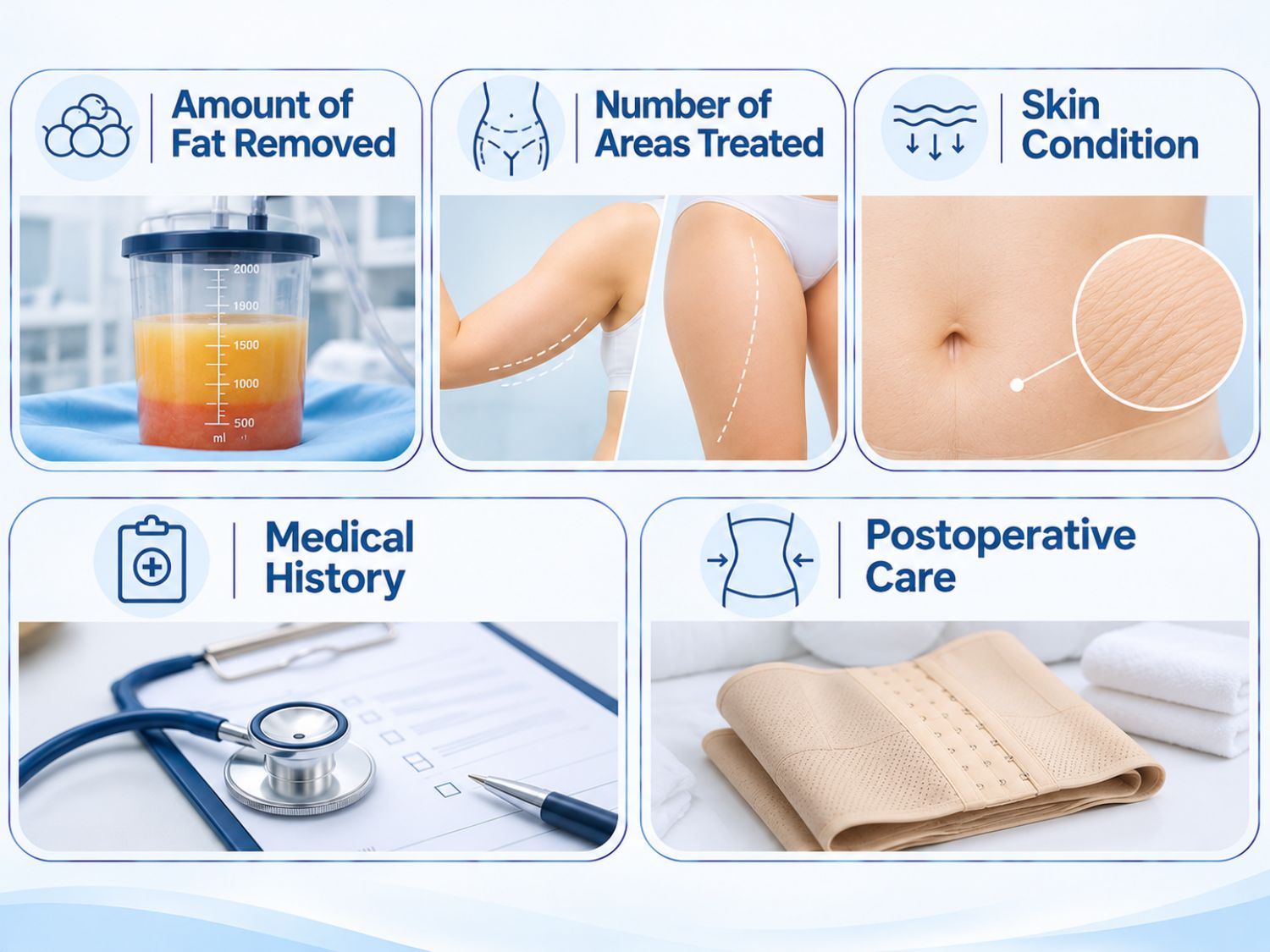
Recovery depends on:
Patients should not judge their recovery solely by the disappearance of bruises. Internal healing continues even when the skin appears normal.
Flying after liposuction may be considered after approximately 5–7 days in selected uncomplicated cases, but this is a minimum reference period rather than a universal safe-flying deadline. Patients undergoing extensive thigh liposuction, combined procedures, or long-distance flights may need considerably longer.
For limited arm liposuction, a return flight may be considered around 7–10 days after surgery when:
This 7–10-day period is a reference for selected uncomplicated cases, not a guarantee.
Thigh liposuction requires particular attention to mobility and prolonged sitting.
Before approving a return flight, the surgeon evaluates:
There is no universally established safe-to-fly day specifically for thigh liposuction. Patients undergoing extensive treatment or long-haul travel should plan additional recovery time.
Combining several areas increases the total amount of surgery and may require a longer observation period.
For international patients undergoing more extensive liposuction, planning approximately 2–4 weeks in Vietnam can provide additional time for recovery and follow-up examinations. This is a planning allowance, not a medically guaranteed clearance period.
International medical reference: The American Society of Plastic Surgeons – Cosmetic Surgery Tourism advises waiting approximately 5–7 days before flying after body procedures such as liposuction. ASPS also warns that combining surgery with travel increases the risk of blood clots and may interrupt access to postoperative care.
Flying too soon after liposuction increases concerns about blood clots, swelling, discomfort, and delayed treatment of surgical complications. Long-haul flights are particularly important because passengers may remain seated for several hours.
Deep vein thrombosis occurs when a blood clot forms in a deep vein, most commonly in the leg.
Following surgery, the body temporarily has an increased tendency to form blood clots. Prolonged sitting can further slow blood circulation in the legs.
Risk factors include:
A blood clot can sometimes travel to the lungs, causing a pulmonary embolism, which may be life-threatening.
After thigh liposuction, prolonged sitting may increase discomfort and make swollen tissues feel tighter.
After arm liposuction, handling heavy luggage or keeping the arms in uncomfortable positions may aggravate soreness.
Although swelling alone does not necessarily indicate a serious complication, worsening or unusual symptoms require medical assessment.

Flying home too early can create difficulties if complications occur during the journey.
Potential concerns include:
Patients should prepare for international travel by completing medical follow-up, arranging assistance with luggage, and following individualized instructions for mobility and blood-clot prevention. These measures help reduce avoidable complications but do not replace medical clearance.
Before your flight

During the flight
Once the surgeon has approved travel:
Important: Postoperative compression garments and medical-grade stockings used to prevent travel-related blood clots have different purposes. Do not assume an arm or thigh compression garment provides adequate protection against DVT.
Patients at increased risk should ask their doctor whether graduated compression stockings or preventive medication are appropriate. Do not self-prescribe aspirin or blood thinners before flying.
After arriving home
Continue following the prescribed recovery instructions, including:
Patients should also have a clear contact plan for medical concerns after leaving Vietnam.
Patients should postpone flying when wounds are not healing normally, mobility remains significantly restricted, or symptoms suggest infection, bleeding, or blood clots. These conditions require medical assessment before travel.
Warning signs that require medical review
Symptoms requiring emergency medical care
These symptoms may indicate serious complications, including pulmonary embolism.
At Kangnam Aesthetic Hospital, recovery planning for international liposuction patients includes medical assessment, postoperative monitoring, follow-up examinations, and individualized travel guidance. The recommended length of stay depends on the treatment areas, surgical extent, and recovery progress.
Our specialist evaluates:

Patients planning a short stay should discuss their travel schedule before deciding on surgery.
The surgeon determines whether arm and thigh liposuction should be performed together or in separate sessions.
The decision considers the total treatment area, expected removal volume, operating time, and individual medical risks.
For suitable patients, Kangnam offers liposuction services targeting localized upper-arm and thigh fat.
Following surgery, recovery instructions cover:
Patients should follow the specific instructions provided by their operating surgeon rather than relying on a general recovery timetable.
Before departure, the doctor assesses:
The final decision should be made after an in-person medical assessment.
International patients should obtain their postoperative instructions and relevant medical records before leaving Vietnam.
When appropriate, follow-up communication can help monitor recovery after departure. However, new or serious symptoms require examination by a local medical professional rather than relying solely on photographs or online consultation.
For additional information, read our guides on Arm Liposuction in Vietnam and Flying After Liposuction.
Flying only 3 days after arm liposuction is generally discouraged because early swelling, discomfort, and surgical complications may still develop. Patients should complete postoperative examinations and obtain medical clearance before traveling, even when the procedure involves a small area.
Thigh liposuction may cause more difficulty with walking, sitting, and certain daily movements because the legs are involved in weight-bearing activities. However, overall recovery time depends on treatment extent, fat volume, health, and healing rather than the body area alone.
Yes, prescribed postoperative compression garments can usually be worn during travel when they fit properly and the surgeon approves. However, these garments should not be confused with medical compression stockings specifically recommended for blood-clot prevention.