Date posted: 13-11-2026 | Last updated : 18-11-2026
There is no universal safe limit for pure fat removal, but the American Society of Plastic Surgeons (ASPS) uses 5 liters of total aspirate—fat and fluid combined—to define large-volume liposuction. The appropriate amount depends on body weight, fat distribution, overall health, and the areas being treated.
5-liter threshold: This refers to total aspirate, including fat and fluid, not 5 liters of pure fat.
Individual safety limit: Body mass index (BMI), health conditions, and surgical complexity determine the appropriate removal volume.
Higher risk: Removing larger volumes or treating several areas increases the need for careful monitoring.
Five liters of total aspirate is a clinical threshold for identifying large-volume liposuction, not a guaranteed safe amount for every patient. Some patients may require substantially less, while larger-volume procedures need additional safety precautions.
The American Society of Plastic Surgeons (ASPS) defines large-volume liposuction as approximately 5,000 mL or more of total aspirate.
A study summarized by ASPS examined more than 4,500 liposuction patients and found:
These are findings from an observational study, not a prediction of an individual patient’s risk. The research does not establish 5 liters as an absolute maximum that applies to everyone.
International medical reference: American Society of Plastic Surgeons – How Much Liposuction Is Safe? The Answer Varies by Body Weight (2015).
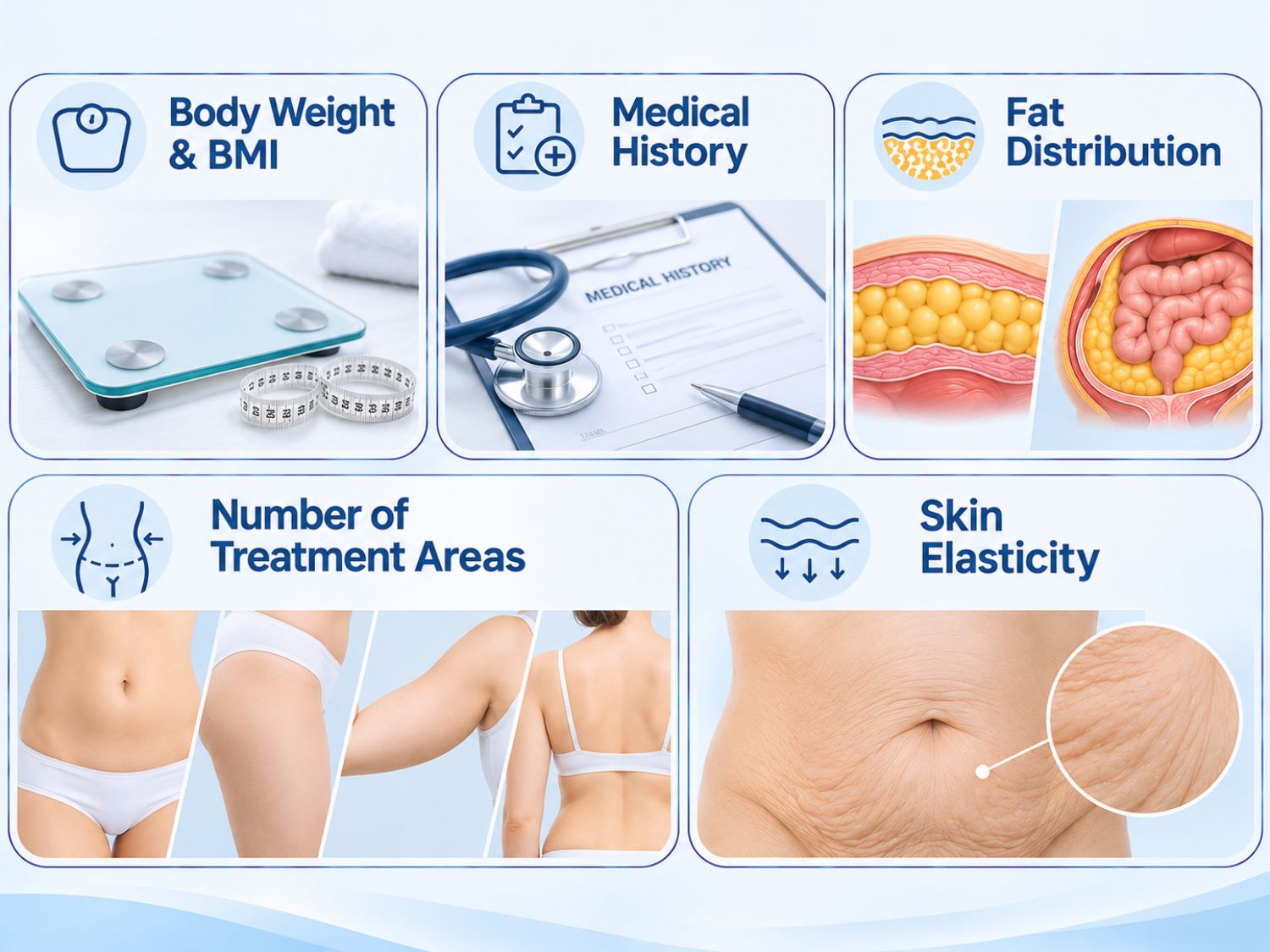
The appropriate fat removal volume depends on overall health, body size, fat distribution, skin elasticity, and the extent of surgery. These factors influence how the body tolerates tissue removal, fluid changes, and recovery.
The amount of fat removed varies by treatment area because different body regions contain different fat deposits and have different anatomical limitations. The goal is to improve proportions without damaging surrounding tissues or removing excessive fat.
| Treatment Area | Main Objective | Important Consideration |
| Double chin | Improve jawline definition | Protect nearby nerves and maintain smooth contours |
| Upper arms | Reduce localized arm fat | Avoid irregularities and excessive skin looseness |
| Abdomen | Reduce stubborn belly fat | Assess skin elasticity and abdominal wall condition |
| Waist and flanks | Improve waist definition | Maintain balanced contours on both sides |
| Thighs | Reduce localized thigh fat | Preserve natural proportions and avoid uneven surfaces |
| Multiple body areas | Improve overall body proportions | Consider combined aspirate volume and operating time |
For more information, explore Abdominal Liposuction in Vietnam at Kangnam.
Excessive liposuction can increase the risk of fluid imbalance, bleeding, blood clots, and tissue damage. These complications may become life-threatening without appropriate surgical precautions and medical monitoring.
Warning signs after liposuction
Chest pain, difficulty breathing, or fainting requires emergency medical care.
Dividing extensive liposuction into separate sessions may reduce the risks associated with removing a large volume in one operation. This approach can be particularly relevant when patients want fat removed from several body areas.
A surgeon may consider multiple procedures when:

At Kangnam Aesthetic Hospital, the planned fat removal volume is determined through medical screening, examination of the treatment areas, and individualized surgical planning. The priority is to achieve balanced body contouring while keeping the extent of surgery appropriate for each patient’s condition.
Step 1 – Medical consultation
Our specialist evaluates:
Step 2 – Preoperative assessment
Necessary examinations are performed to evaluate surgical fitness.
These may include blood tests, cardiovascular assessment, and an anesthesia consultation, depending on the patient’s health and planned procedure.

Step 3 – Individualized surgical planning
The surgeon determines:
Kangnam’s body-contouring services include targeted liposuction and Lipo 360 for selected patients.
The extraction volume is determined by the medical assessment, not by a fixed number of liters promised before surgery.
Step 4 – Surgical and postoperative monitoring
During surgery, the medical team monitors the patient’s condition, including relevant vital signs and fluid management.
Following the procedure, postoperative care includes monitoring recovery, evaluating swelling, providing wound-care instructions, and scheduling follow-up examinations.
Large-volume procedures may require extended postoperative observation according to the surgeon’s assessment.
Step 5 – Recovery and long-term results
Liposuction removes selected subcutaneous fat cells, but the remaining fat cells may enlarge with future weight gain.
To help maintain the result, patients should:
Patients planning liposuction in Vietnam can also read our guide: Is Liposuction Safe in Vietnam?.
Schedule Your Liposuction Consultation at Kangnam
Want to know how much fat can be safely removed from your abdomen, thighs, arms, or waist? Book a consultation with Kangnam’s body-contouring specialists for an individualized examination, surgical safety assessment, and treatment plan.
Liposuction usually produces a relatively modest change in body weight because it is designed to reshape specific areas rather than treat obesity. The amount shown on the scale immediately after surgery may also be affected by swelling and retained fluid.
A smaller removal volume generally involves less tissue disruption, but 3 liters cannot automatically be considered safe for every patient. The surgeon must distinguish pure fat from total aspirate and consider body size, medical conditions, and the number of areas treated.
Combining abdominal and thigh liposuction may be appropriate for selected healthy patients when the overall surgical extent remains acceptable. The surgeon must assess the combined aspirate volume, operating time, anesthesia requirements, and recovery risks before approving the procedure.
No, removing excessive fat can cause loose skin, uneven contours, or unnatural body proportions. A successful liposuction procedure focuses on removing the appropriate amount of fat while preserving smooth transitions and balanced anatomy.