
Date posted: 13-11-2026 | Last updated : 18-11-2026
Liposuction is generally better for removing larger, localized fat deposits in one procedure, while non-surgical treatments are more suitable for smaller fat deposits and patients who prefer to avoid surgery. The right choice depends on the amount of fat beneath your chin, skin elasticity, jawline structure, and expected results.
Double chin liposuction: Removes fat directly, usually in one surgical session.
Non-surgical fat reduction: Uses injections or selected energy-based devices to reduce fat gradually.
Best candidates: Both approaches work best when chin fullness is caused primarily by excess fat and skin elasticity is adequate.
A double chin usually develops from excess fat beneath the jaw, but loose skin, genetics, and facial bone structure can also contribute. Identifying the underlying cause is essential because removing fat alone will not correct every type of double chin.
The most common causes include:
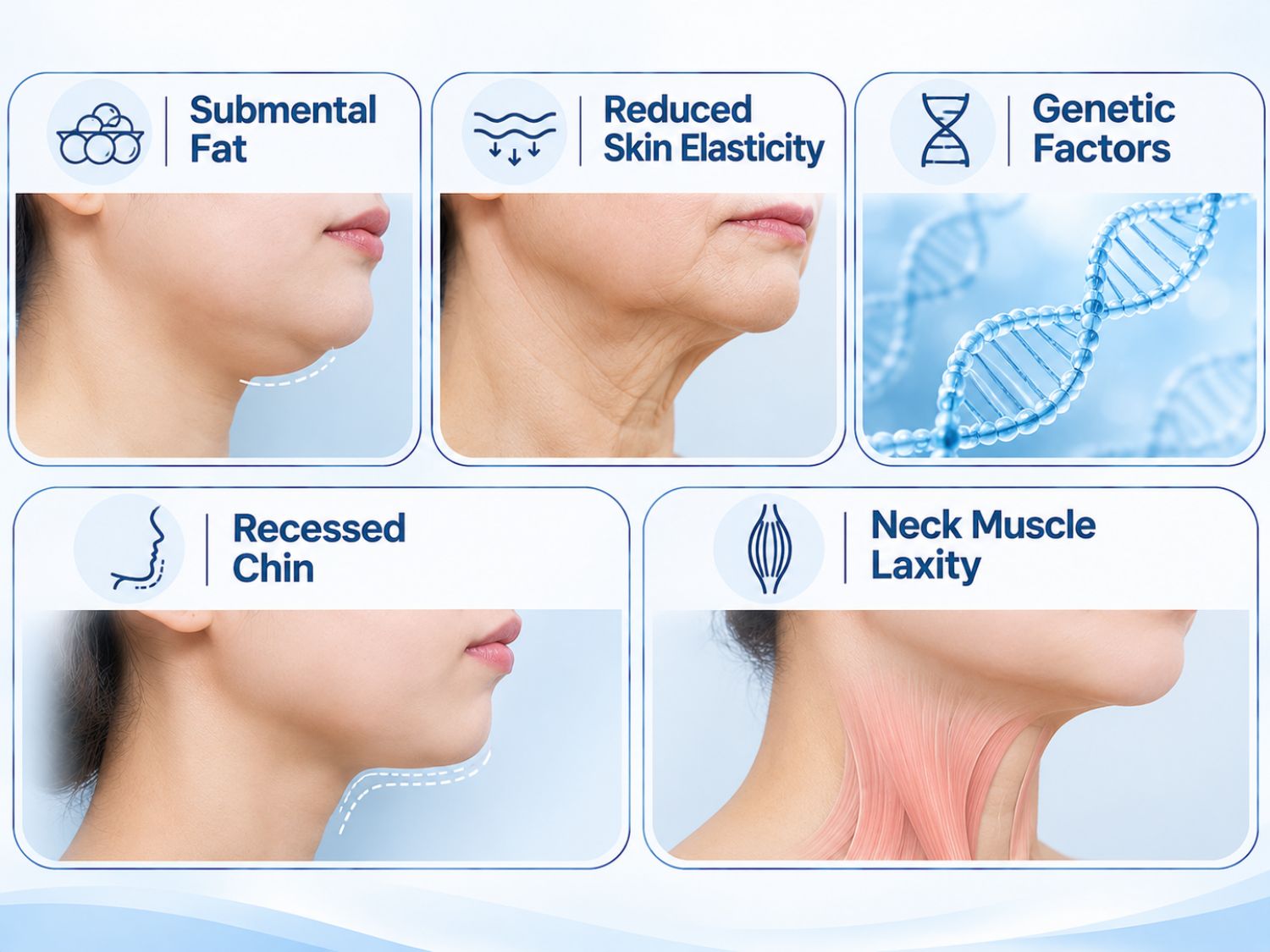
For example, a 35-year-old with a noticeable fatty fold beneath the chin and firm skin may benefit from fat removal. However, a 55-year-old with loose neck skin and very little excess fat may need a skin-tightening or lifting procedure instead.
Double chin liposuction removes fat through a small surgical incision, while non-surgical fat reduction gradually reduces fat cells without surgical suction. Liposuction typically provides a more substantial change after one procedure, whereas non-surgical options may require multiple sessions.
| Comparison | Double Chin Liposuction | Non-Surgical Fat Reduction |
| Technique | Fat is removed using a thin cannula | Injections or external energy-based devices |
| Best suited for | Moderate to larger localized fat deposits | Small to moderate fat deposits, depending on treatment |
| Treatment sessions | Usually one | Often multiple |
| Results | More substantial fat removal may be achieved | Gradual, typically more limited reduction |
| Recovery | Swelling, bruising, and postoperative care required | Usually shorter recovery, but swelling or discomfort may still occur |
| Skin tightening | Depends on natural skin contraction | Varies by device; fat-dissolving injections do not reliably tighten skin |
| Incisions | Small surgical incision | No surgical incision; injections involve needle punctures |
| Main limitations | Surgical and anesthesia risks | Multiple sessions and variable results |
Common non-surgical double chin treatments include fat-dissolving injections, selected radiofrequency or ultrasound-based procedures. Each method works differently, and not all are equally effective at reducing fat.
Fat-dissolving injections use a medication to disrupt targeted fat cells beneath the chin.
A well-studied example is deoxycholic acid, which is approved by the U.S. FDA for reducing moderate to severe submental fat in adults under specified conditions.

Advantages:
Limitations:
Product approval differs between countries. Patients in Vietnam should verify the exact medication’s authorization and treatment indication rather than assuming that every product advertised as a fat-dissolving injection is approved.
Selected radiofrequency (RF) and ultrasound treatments deliver energy into tissues beneath the skin.
Depending on the device, they may target fat, stimulate collagen remodeling, or improve mild skin laxity.
Advantages:
Limitations:
The American Society of Plastic Surgeons (ASPS) explains that non-surgical fat-reduction techniques use cooling, heat, or injectable medication to target fat cells. These treatments offer alternatives for people who wish to avoid surgery, but they do not replace liposuction when greater fat removal is necessary.
International reference: American Society of Plastic Surgeons – Nonsurgical Fat Reduction.
Liposuction is generally more suitable for patients with thicker localized chin fat and good skin elasticity, while non-surgical treatments may be appropriate for mild to moderate fat deposits and those seeking less invasive options.

Fat removal alone is unlikely to provide the desired result when:
Clinical example: A 40-year-old with a thick layer of chin fat but firm skin may achieve more noticeable contour improvement with liposuction. A patient of the same age with only a small fat deposit may prefer injections or another non-surgical option.
If significant skin sagging is present, the doctor may recommend a separate lifting or tightening procedure instead of removing additional fat.
Both double chin liposuction and non-surgical fat reduction have potential risks, and neither should be considered completely safe for every patient. The most important factors are correct treatment selection, professional qualifications, appropriate equipment, and complication management.
Possible complications include:

Possible complications include:
At Kangnam Aesthetic Hospital, double chin liposuction involves facial assessment, medical screening, targeted fat removal, and postoperative monitoring. The treatment plan is designed around each patient’s chin fat distribution, skin elasticity, and overall facial proportions.
Kangnam uses VASER 6D-assisted liposuction for selected double chin fat-removal procedures.
VASER technology uses ultrasound energy to help loosen targeted fat before extraction through a small cannula. The amount of fat removed is determined by the surgeon according to the patient’s anatomy.
The procedure remains surgical and does not guarantee pain-free treatment, faster recovery, or complication-free results.
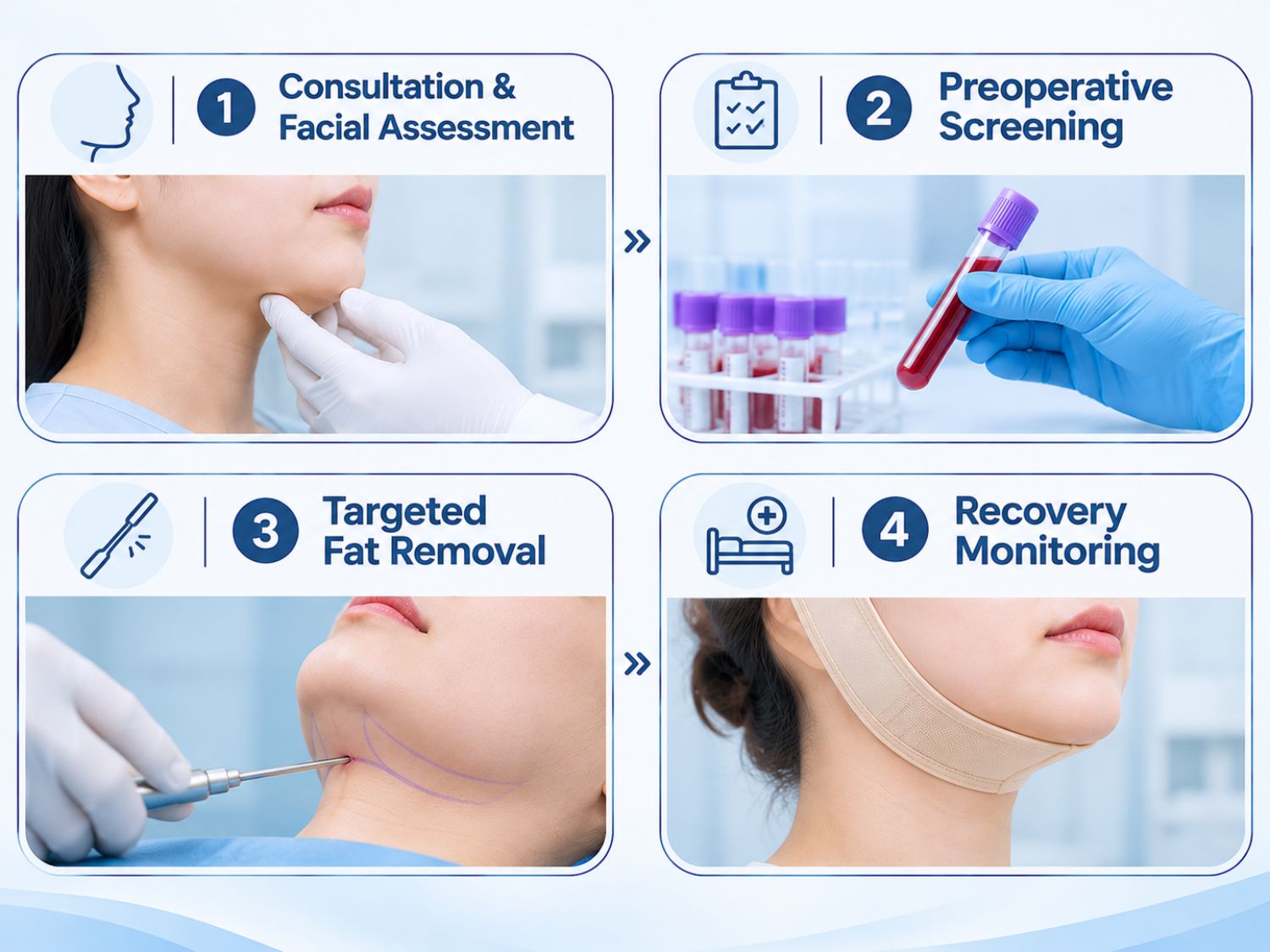
Double chin liposuction process at Kangnam
Step 1 – Consultation and facial assessment
The doctor evaluates:
Step 2 – Preoperative screening
Medical examinations and necessary tests are performed to assess surgical fitness. The anesthesia plan is selected according to the patient’s health and treatment requirements.
Step 3 – Targeted fat removal
The surgeon makes a small incision and removes selected fat using a thin cannula with the planned liposuction technique.
Step 4 – Recovery monitoring
After treatment, the medical team monitors swelling, bleeding, discomfort, and general recovery. Patients receive instructions for compression garments, wound care, and follow-up appointments.
The priority is balanced fat removal that improves the lower-face contour without creating excessive hollowness or unevenness.
For details about this service, see Double Chin Liposuction at Kangnam.
Double chin liposuction usually removes the selected fat in one procedure, while non-surgical treatments produce more gradual results and may require repeated sessions. Total cost should therefore be evaluated alongside treatment effectiveness, downtime, and the number of appointments needed.
Recovery depends on the treatment:
Patients should avoid scheduling a major event immediately after either treatment because facial swelling may temporarily affect their appearance.
Liposuction is generally more effective when a substantial amount of localized chin fat must be removed in one procedure. Fat-dissolving injections may be suitable for smaller deposits, but they often require multiple sessions and can cause temporary swelling.
Yes, selected fat-dissolving injections, cryolipolysis, and certain energy-based treatments may improve mild to moderate chin fullness. However, non-surgical treatments cannot reliably correct significant loose skin or structural jawline problems.
Removing excessive fat from skin with poor elasticity can make sagging more noticeable. Patients with firm skin generally have a better chance of smooth skin contraction, while those with substantial laxity may need a different procedure.
Liposuction permanently removes selected fat cells, but the remaining cells can enlarge when body weight increases. Maintaining a stable weight helps preserve the improved chin contour, although normal aging may still affect the neck and jawline.
Double chin liposuction may provide a greater reduction in fat after one procedure, but swelling can hide the result for several weeks. Non-surgical treatments typically require more time or multiple sessions, so the best choice depends on your anatomy, recovery preferences, and medical suitability.