Date posted: 21-07-2026 | Last updated : 25-07-2026
Chin liposuction is a cosmetic solution for reducing excess facial fat and creating a slimmer, more defined lower face. The procedure may provide noticeable improvement for suitable patients.
However, chin liposuction is an invasive cosmetic procedure and cannot be guaranteed to cause no complications. Patients should undergo treatment at a licensed medical facility under the care of a qualified surgeon.
The following article provides detailed information about the chin and double-chin liposuction technology currently available at Kangnam Aesthetic Hospital.
Chin liposuction is a procedure that removes localised fat from the chin and the area beneath it to create a slimmer contour and improve jawline definition.
Although only a small incision and a thin suction cannula are used, chin liposuction is still a minimally invasive surgical procedure. The surgeon inserts the cannula beneath the skin and removes the selected excess fat.
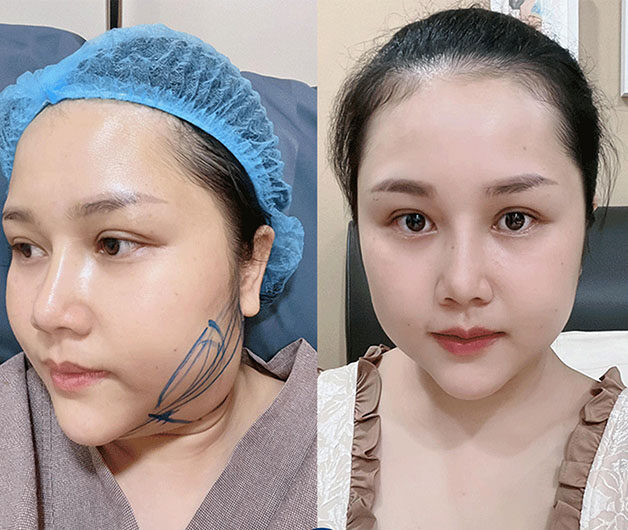
Chin liposuction removes localised fat accumulated beneath the chin.
The procedure may be suitable when the fullness is caused primarily by excess fat. However, it cannot correct every cause of a poorly defined jawline, including:
Patients seeking a broader understanding of facial fat removal may refer to Facial Liposuction and What Is Liposuction?.
Kangnam applies Vaser 6D tumescent-assisted liposuction to selected chin and facial fat-reduction procedures.
Despite being described in some promotional materials as “non-surgical,” liposuction remains an invasive procedure because a small incision is made and a cannula is inserted beneath the skin.
A tumescent solution is introduced into the treatment area to help:
The surgeon then inserts a small cannula, stated to measure approximately 2.2–3.7mm in diameter, to remove the selected fat.
The cannula and associated technology are designed to support controlled fat extraction while limiting unnecessary trauma to surrounding tissue.
Claims involving “millions of microscopic water molecules” should be understood as promotional descriptions of the tumescent technique rather than a separate medical mechanism.
Multipoint technology may also be used to support treatment distribution and postoperative comfort. However, no technology can guarantee complete pain prevention or a complication-free recovery.
Further information about this body-contouring approach is available in Kangnam’s Lipo 360 Technology.
Vaser 6D tumescent-assisted liposuction offers several potential advantages for suitable patients.
The procedure is designed to identify and remove localised fat from areas that may be difficult to improve through weight management alone, including:
The surgeon makes a small incision to insert the thin cannula beneath the skin.
Because the incision is small, the resulting scar may be discreet and gradually fade. However, no surgical procedure can guarantee that there will be no visible scar.
The treatment aims to limit unnecessary tissue trauma, but it should not be described as completely non-invasive.
Chin liposuction may provide a noticeable reduction in localised fat and improve jawline definition.
Claims that the procedure removes exactly 95.99% of fat should not be interpreted as a guaranteed or medically desirable result. Excessive fat removal may cause:
Although swelling may begin to decrease after approximately five to seven days, the chin may not appear fully recovered at this stage.
The final contour generally develops over several weeks or months.
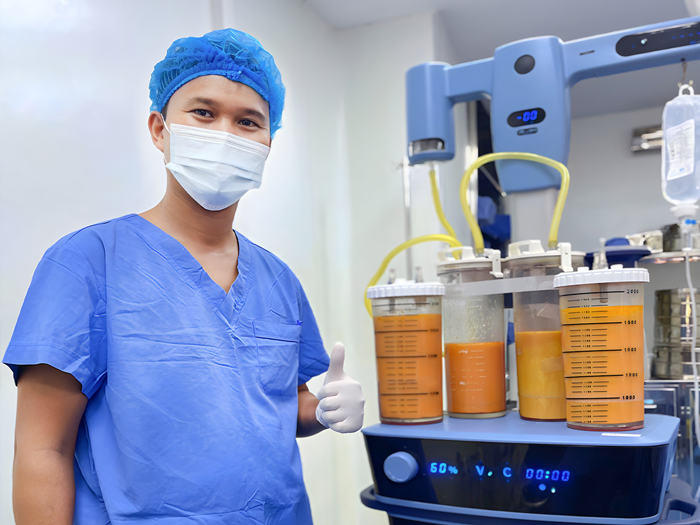
Vaser 6D technology is used to remove selected localised fat deposits.
Liposuction removes existing fat cells from the treated area, but it cannot guarantee that fat will never accumulate again. Significant weight gain may enlarge the remaining fat cells and alter the result.
Modern liposuction techniques may provide more controlled fat removal than older manual methods.
After fat extraction, selected energy-assisted technology may be applied to support tissue contraction and collagen remodelling.
However, the degree of tightening varies according to:
Removing excess fat may allow the skin beneath the chin to adapt to a slimmer contour.
Patients with good skin elasticity are more likely to achieve a smooth and firm result.
Those with significant loose or sagging skin may require an additional tightening or lifting procedure because liposuction alone does not remove excess skin.
Information about non-surgical or minimally invasive rejuvenation options is available in Non-Invasive Facial Rejuvenation.
Kangnam performs Vaser 6D chin liposuction through a structured medical process.
A qualified doctor examines the patient and evaluates:
The doctor then determines whether liposuction is appropriate or whether another treatment would provide a better result.

The doctor directly examines the patient and recommends an appropriate treatment plan.
Patients may be asked to complete preoperative examinations such as:
If the results are suitable, the doctor marks the areas where fat will be removed.
Patients with certain conditions may not be suitable candidates, including those with:
Preoperative testing reduces surgical risk but cannot guarantee that no complication will occur.
The treatment area is cleaned and disinfected to reduce the risk of infection.
Depending on the procedure and patient, the doctor may use:
The patient’s vital signs should be monitored by qualified medical staff throughout the procedure.
The original content mentions both general and local anaesthesia. The actual method should be selected according to the procedure’s extent and the anaesthetist’s assessment.
Based on the examination results, the surgeon selects appropriate treatment settings and removes the marked excess fat.
A small incision is made, and the cannula is inserted beneath the skin to remove the loosened fat.
The procedure must be performed conservatively to protect:
After fat removal, the surgeon evaluates the skin and overall jawline contour.
The patient is then transferred to a postoperative recovery area for monitoring.
The medical team may:
Mild pain, swelling, bruising, tightness, and temporary numbness may occur during the first several days.
Patients should follow the doctor’s instructions to support recovery.
They should contact the medical team immediately if they experience:
The listed price for chin and double-chin liposuction at Kangnam is shown below.
The price does not include promotional programmes. Overseas Vietnamese patients may contact hotline 001650-2852-885 for information about current offers.
| Service | Approximate price (USD) |
|---|---|
| Vaser 6D tumescent-assisted fat reduction for the arms, back, underarms, shoulders, chin, cheeks, flanks, or calves | 1,710 |
The final treatment cost may vary according to:
Patients should request a written quotation confirming what is included in the service package.
For information about selecting a provider, refer to Top Liposuction Facilities in Vietnam for International Patients.
The original article presents images of patients before and after chin liposuction at Kangnam.
Examples include:
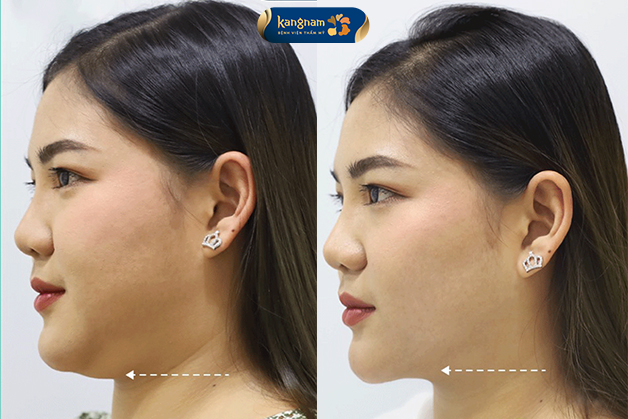
An overseas Vietnamese patient returned from Australia for double-chin liposuction.
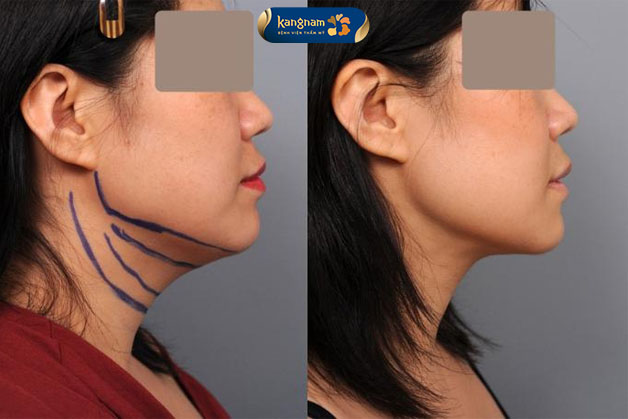
A slimmer, more V-shaped lower face after chin fat reduction.
Claims that there will be no lumps, irregularities, invasion, or safety risks cannot be guaranteed.
Before-and-after images represent individual results and should not be viewed as a guarantee.
The result depends on:
The final result may take several weeks or months to become fully visible.
Chin liposuction may effectively reduce localised fat beneath the chin and create a slimmer, more defined jawline in suitable patients.
However, it remains an invasive cosmetic procedure and may involve risks such as:
Patients should choose a licensed hospital, verify the surgeon’s qualifications, and undergo a complete in-person assessment before treatment.
Overseas Vietnamese patients interested in this service may contact Kangnam via hotline 001650-2852-885 for preliminary consultation and information about current promotional programmes.
Patients should allow sufficient time in Vietnam for medical assessment, treatment, and an initial postoperative follow-up before returning overseas.
Facial Liposuction: Procedure, Benefits, and Recovery
What Is Liposuction? Procedure, Cost, and Safety Considerations