Date posted: 21-07-2026 | Last updated : 18-11-2026
Drooping eyelids (ptosis) are an eyelid imperfection that makes the eyes look tired and lifeless. Ptosis can occur at any age, and the best way to correct it is ptosis surgery at a reputable aesthetic hospital.
Ptosis is classified into 4 degrees:
– Grade 1: the mildest form of ptosis. The eyelid margin only just reaches the pupil. Vision is not yet significantly affected, but the eyes start to look sleepy and dull.
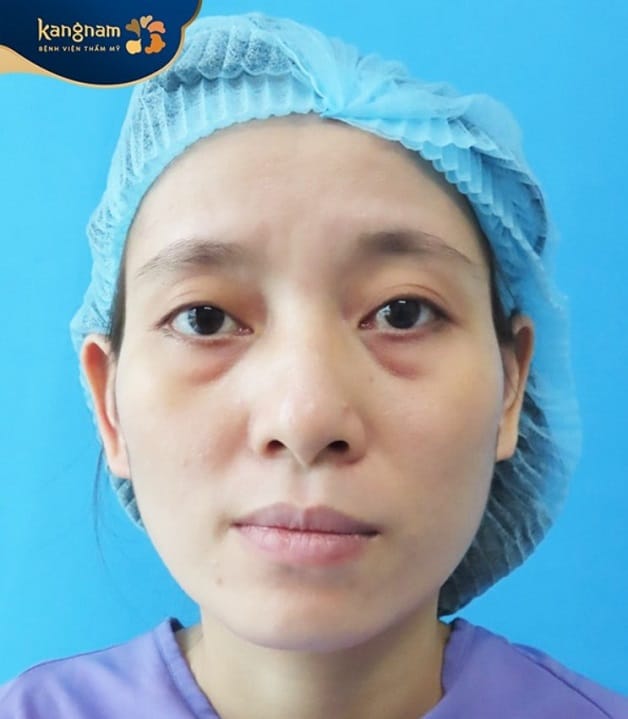
Mild eyelid ptosis
WHAT CAN YOU DO ABOUT DROOPY EYELIDS?
– Grade 2: moderate ptosis. The gap between the eyelid margin and the eye narrows further, overlapping the pupil but not past its centre. Part of the field of vision is lost and the eyes look less attractive, creating facial imbalance.
– Grade 3: severe ptosis, where the eyelid covers half of the pupil. To see clearly, you have to tilt your head back so the pupil clears the drooping lid, which greatly affects eye function and daily life.
– Grade 4: very severe ptosis. The eyelid completely covers the pupil, causing total loss of vision through that eye.
– Congenital ptosis: congenital ptosis accounts for up to 75% of cases, with the upper eyelid covering the edge of the cornea.
– Failed previous eyelid surgery: a poorly performed eyelid operation can also cause ptosis. Incorrect surgical technique damages the eyelid, which over time ages, wrinkles and droops over part of the pupil.
– Muscle weakness: eyelid muscle weakness is common in older people. If left untreated for 5–10 years, it causes the eyelids to droop.
– Aging: with age, the skin around the eyes loses firmness and elasticity, the levator muscle weakens and excess fat forms, causing the eyelids to sag.
– Trauma: injuries or strong impacts can cause ptosis. Wearing contact lenses, heavy makeup and staying up late can also damage the eyelids and lead to drooping.
– Third cranial nerve palsy: the third cranial nerve controls 4 of the 6 eye muscles. When it is damaged, the eye muscles lose function, leading to ptosis.
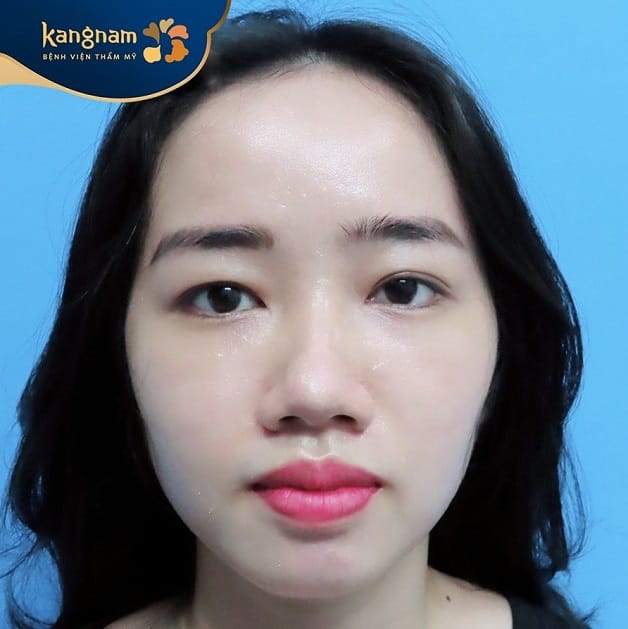
Ptosis caused by eyelid muscle weakness
Surgery is the best way to correct ptosis, lifting the drooping eyelid back to its natural position and restoring lively, open eyes.
At Kangnam Aesthetic Hospital, clients with congenital ptosis are advised on one of two methods: levator muscle shortening or levator muscle suspension.
During the procedure, the surgeon makes a small incision in the upper eyelid, adjusts the muscle, lifts or shortens the levator muscle, then refines the result so the eyes look balanced and attractive.
– Levator muscle shorteningPerformed by removing excess skin, shortening the levator muscle and adjusting the orbicularis muscle. This method suits ptosis cases where the levator muscle still works well.
– Levator muscle suspensionThe eyelid is suspended from the brow or forehead muscle to create a new lid contour, suitable for cases with a weak levator muscle.
After 5–7 days, the eyes look bigger and more defined, recover naturally and show no visible signs of eyelid surgery.
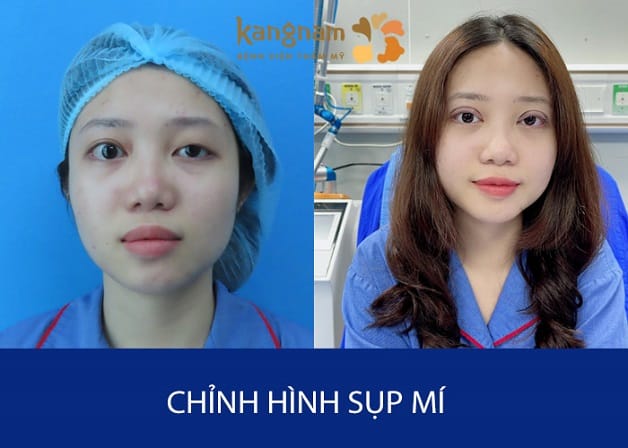
Congenital ptosis correction at Kangnam
Age-related ptosis can be corrected with blepharoplasty. The surgeon examines the eyelids, measures and marks the exact area to treat, then removes loose skin and excess fat so the eyes look younger, more balanced and the field of vision widens.
– K-Eye blepharoplasty technique
K-Eye blepharoplasty works on the upper eyelid skin through a small incision to correct eyelid imperfections and eliminate ptosis. A plasma scalpel is used together with local or twilight anesthesia, so clients feel no pain or discomfort during surgery.
After surgery, the incision is closed with fine cosmetic sutures so the crease heals quickly and suits your face.
– 6D blepharoplasty technique
6D blepharoplasty is another advanced eyelid technique that thoroughly removes loose skin and excess fat, effectively correcting ptosis. A scar-minimising 0.1mm incision made with a specialised plasma scalpel seals blood vessels and reduces swelling and pain. After surgery, clients receive Double Plasma therapy for recovery up to twice as fast. Within just 5–7 days, the eyes recover, look balanced and the ptosis is corrected.
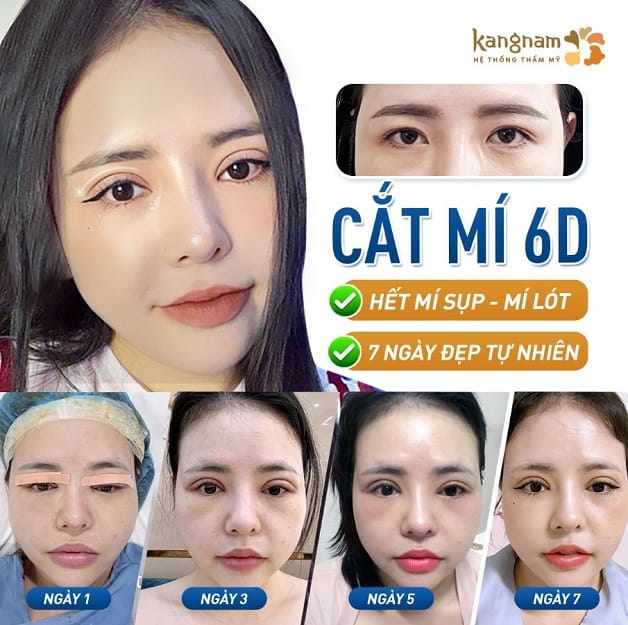
6D blepharoplasty effectively corrects drooping eyelids
CLICK NOW TO GET OUR SPECIAL OFFER PRICE
Kangnam Aesthetic Hospital is a top choice for ptosis correction for the following reasons:
The hospital has a team of experienced surgeons and specialists with in-depth training in ptosis correction. Their professionalism and expertise ensure every procedure is performed safely and effectively.
Kangnam’s doctors also regularly train abroad and stay up to date with the latest technology, helping ptosis correction deliver excellent results.
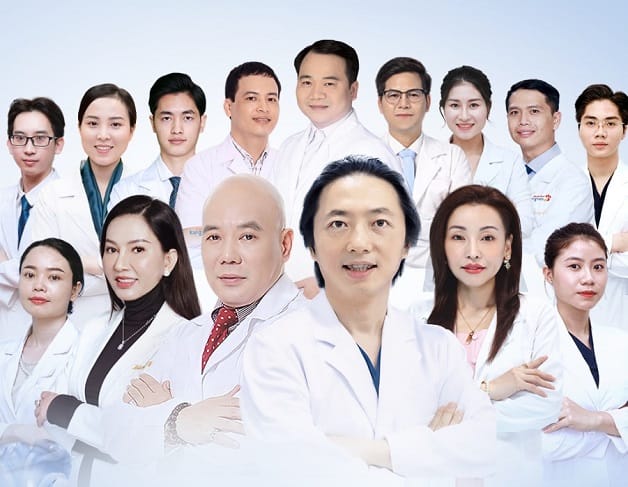
Kangnam’s experienced team of surgeons and specialists
The hospital uses the most modern technology and equipment. This not only optimises results but also ensures surgery is precise, safe and as low-risk as possible.
Kangnam offers a wide range of aesthetic and ptosis correction services to meet each client’s needs and goals, making it easier to choose the method best suited to your condition.
Finally, the hospital consistently receives positive client reviews, a testament to the quality of its services and client satisfaction. This trust is a strong reason to choose Kangnam Aesthetic Hospital for ptosis correction.
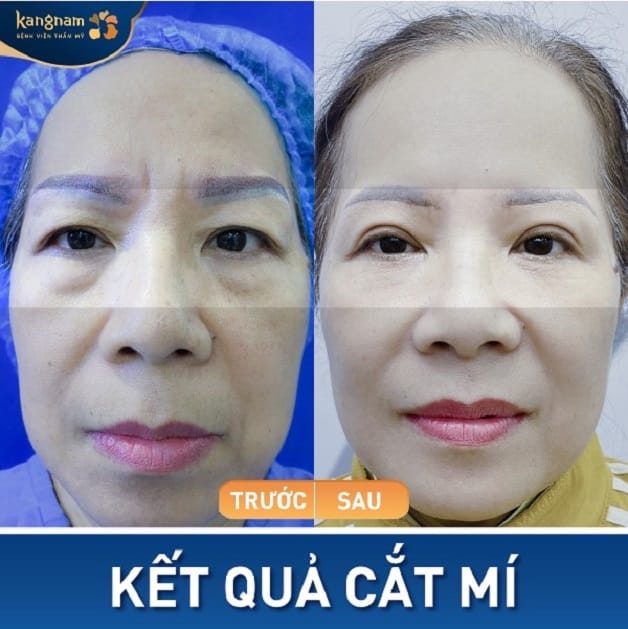
Even, attractive creases with no more drooping
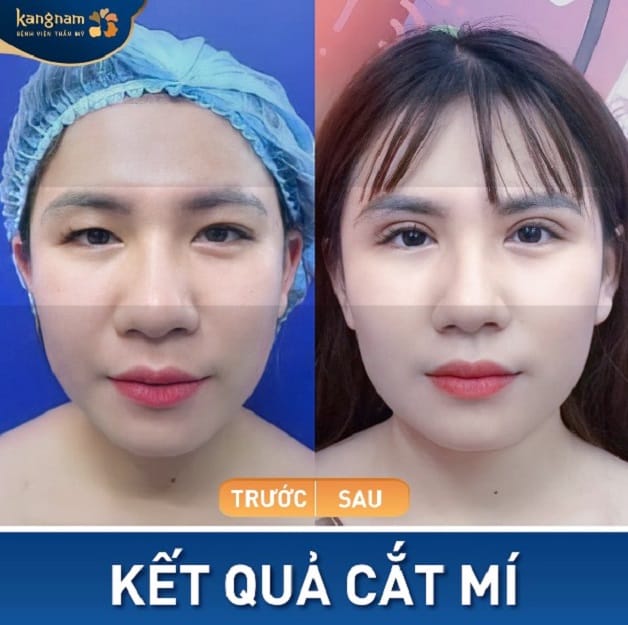
Large, round eyes in harmony with the face
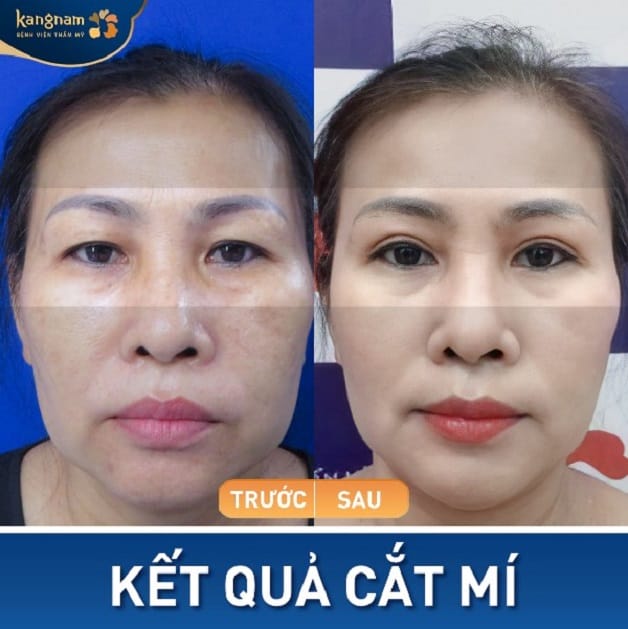
Drooping lids no longer cover the pupil
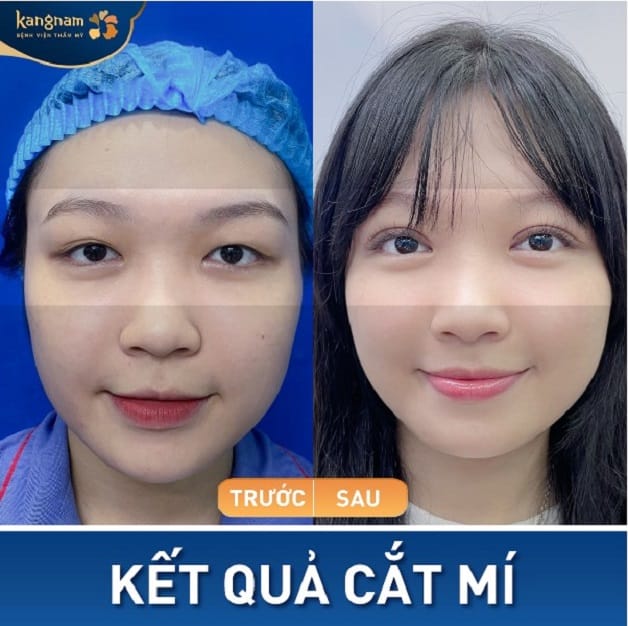
Tired-looking eyes become bright and expressive
That is everything you need to know about correcting drooping eyelids. For any questions, please call 001650-2852-885 for a quick answer.