Date posted: 21-07-2026 | Last updated : 25-07-2026
A thread lift is a minimally invasive aesthetic procedure in which specialised biocompatible threads are inserted beneath the skin to lift and support sagging tissue. In addition to providing mechanical support, absorbable threads may stimulate collagen production around the treated areas, helping improve skin firmness and texture over time.
The X-Line thread lift is a facial rejuvenation technique that uses absorbable polymer threads designed to provide support beneath the skin. Depending on the patient’s facial anatomy and degree of skin laxity, the threads may help lift sagging tissue, improve facial contours, and stimulate collagen remodelling.
Some lifting effects may be visible shortly after the procedure, while the final result develops gradually as swelling subsides and collagen production increases. The longevity of the result varies between patients and depends on the type and number of threads used, the treatment area, the patient’s age, skin quality, lifestyle, and natural ageing process.
Learn more about the general principles of a collagen thread lift and how it may support non-surgical facial rejuvenation.
X-LINE THREAD LIFT – A COMPREHENSIVE FACIAL REJUVENATION OPTION
An X-Line thread lift may be considered for:
A thread lift is generally more suitable for mild to moderate sagging than for severe skin laxity. Patients with advanced ageing, substantial excess skin, or significant tissue descent may achieve more predictable results with surgery.
People with active skin infections, bleeding disorders, uncontrolled medical conditions, or certain immune-related conditions may not be suitable candidates. A medical consultation is required before treatment.
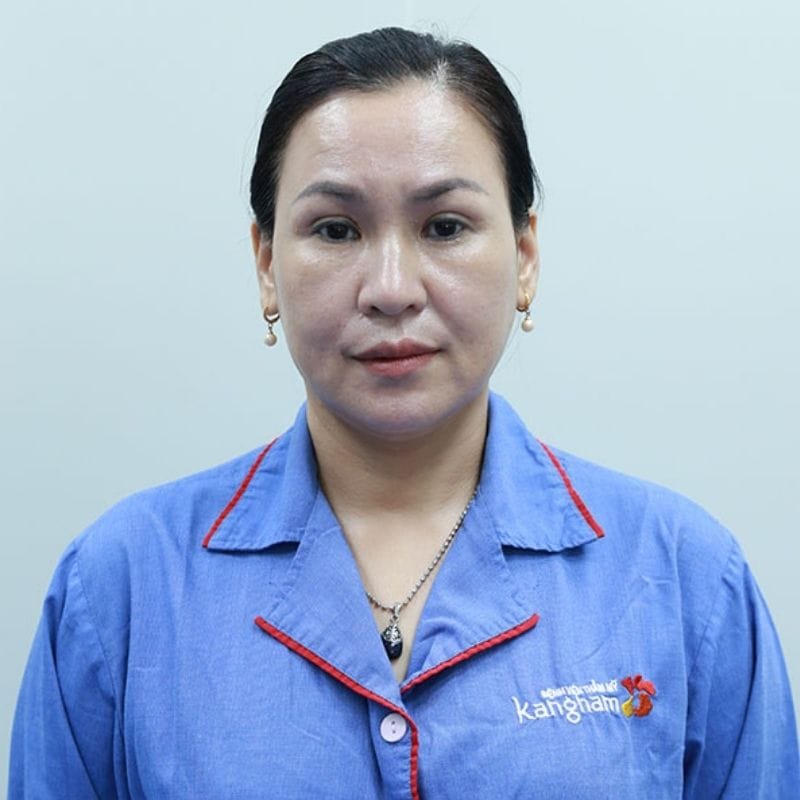
Ageing may cause the skin to lose firmness and gradually sag.
A thread lift may offer several aesthetic benefits, depending on the patient’s condition and treatment plan.
Threads placed beneath the skin act as a supporting framework that can reposition mildly sagging tissue. The procedure may improve the appearance of:
A thread lift cannot remove excess skin or provide the same degree of correction as a surgical facelift.
The placement of absorbable threads causes a controlled tissue response around the treatment area. As part of the healing process, the body may produce new collagen around the threads.
This may gradually improve skin firmness, elasticity, and texture. However, collagen production varies between patients, and results cannot be guaranteed.
By repositioning selected areas of soft tissue, a thread lift may help create:
For patients seeking alternatives to surgery, other non-invasive facial rejuvenation treatments may also be considered.
Some lifting may be visible immediately after treatment. However, the face may initially appear swollen, tight, or slightly uneven.
The result generally becomes more natural as swelling decreases and the tissues settle over the following weeks.
Most patients can resume light daily activities relatively soon after treatment. Nevertheless, swelling, bruising, tenderness, tightness, and temporary facial asymmetry may occur.
Patients should avoid describing thread lifting as a procedure requiring absolutely no downtime, because recovery differs between individuals.
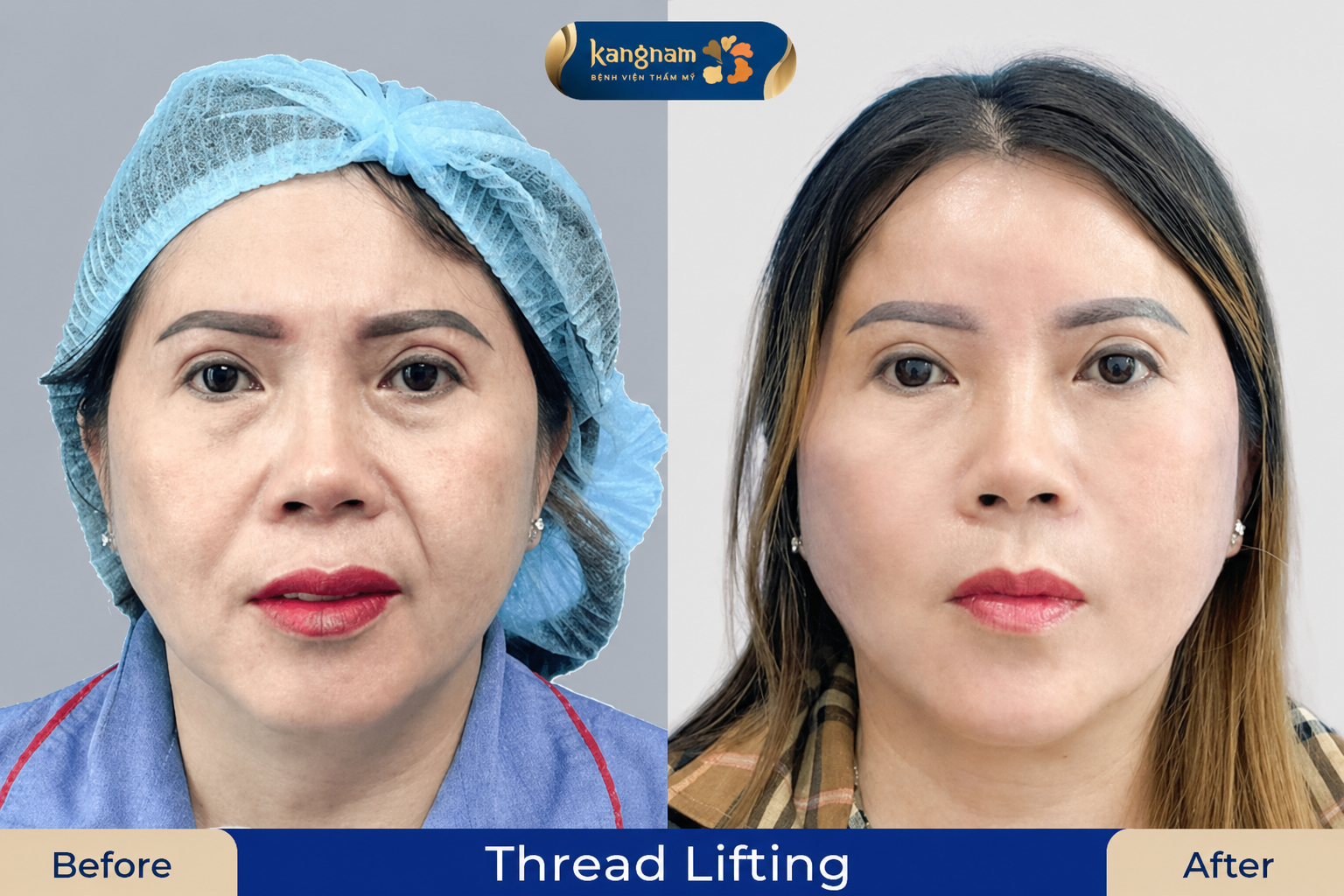
The X-Line thread lift offers a relatively short recovery period compared with surgical facial lifting.
The following table compares an X-Line thread lift with injectable treatments and surgical facelift procedures.
| Criterion | X-Line thread lift | Dermal filler/Botox | Surgical facelift |
|---|---|---|---|
| Level of invasiveness | Minimally invasive; no large surgical incision | Injectable, non-surgical treatment | Invasive surgery |
| Main mechanism | Provides tissue support and may stimulate collagen production | Filler restores volume; Botox reduces muscle activity responsible for expression lines | Removes or repositions excess skin and deeper facial tissues |
| Main effect | Improves mild to moderate sagging and facial definition | Treats selected areas, depending on the product and indication | Provides more extensive lifting for moderate to severe ageing |
| Typical longevity | Varies; often approximately 12–24 months, depending on the thread and patient | Botox commonly lasts several months; filler duration varies by product and area | Results may last several years but do not stop ageing |
| Recovery | Usually several days to a few weeks | Usually minimal, depending on the injection | Commonly several weeks |
| Potential risks | Swelling, bruising, infection, dimpling, thread visibility, asymmetry, extrusion, or nerve injury | Swelling, bruising, asymmetry, vascular occlusion, infection, or other product-specific risks | Bleeding, infection, scarring, nerve injury, anaesthesia-related risks, and prolonged swelling |
| Suitable candidates | Mild to moderate sagging without substantial excess skin | Patients needing volume restoration or treatment of dynamic wrinkles | Patients with moderate to severe skin and tissue laxity |
An X-Line thread lift occupies a middle ground between injectable treatment and facelift surgery. It may provide more structural support than filler or Botox alone but cannot reproduce the degree of lifting achieved through surgery.
Patients considering injectable treatments should understand that filler and Botox have different purposes. Information about possible long-term concerns is available in Is Filler Harmful in the Long Term? and Is Botox Harmful?.
The treatment process typically includes the following steps.
The doctor assesses:
The doctor will also determine whether a thread lift, filler, energy-based treatment, or surgical procedure is more appropriate.
The treatment area is cleansed and disinfected to reduce the risk of infection.
Local anaesthetic is then administered to minimise discomfort. Patients may still experience pressure, pulling, or mild discomfort during thread placement.
The doctor marks the planned insertion points and lifting vectors. The threads are then introduced beneath the skin using specialised needles or cannulas.
The direction, depth, and number of threads must be carefully selected based on the patient’s facial anatomy.
Although the procedure is minimally invasive, incorrect placement may cause asymmetry, puckering, visible threads, nerve irritation, or vascular injury.
After the procedure, patients receive instructions for home care. Recommendations may include:
Detailed recommendations are available in What to Avoid After a Collagen Thread Lift.
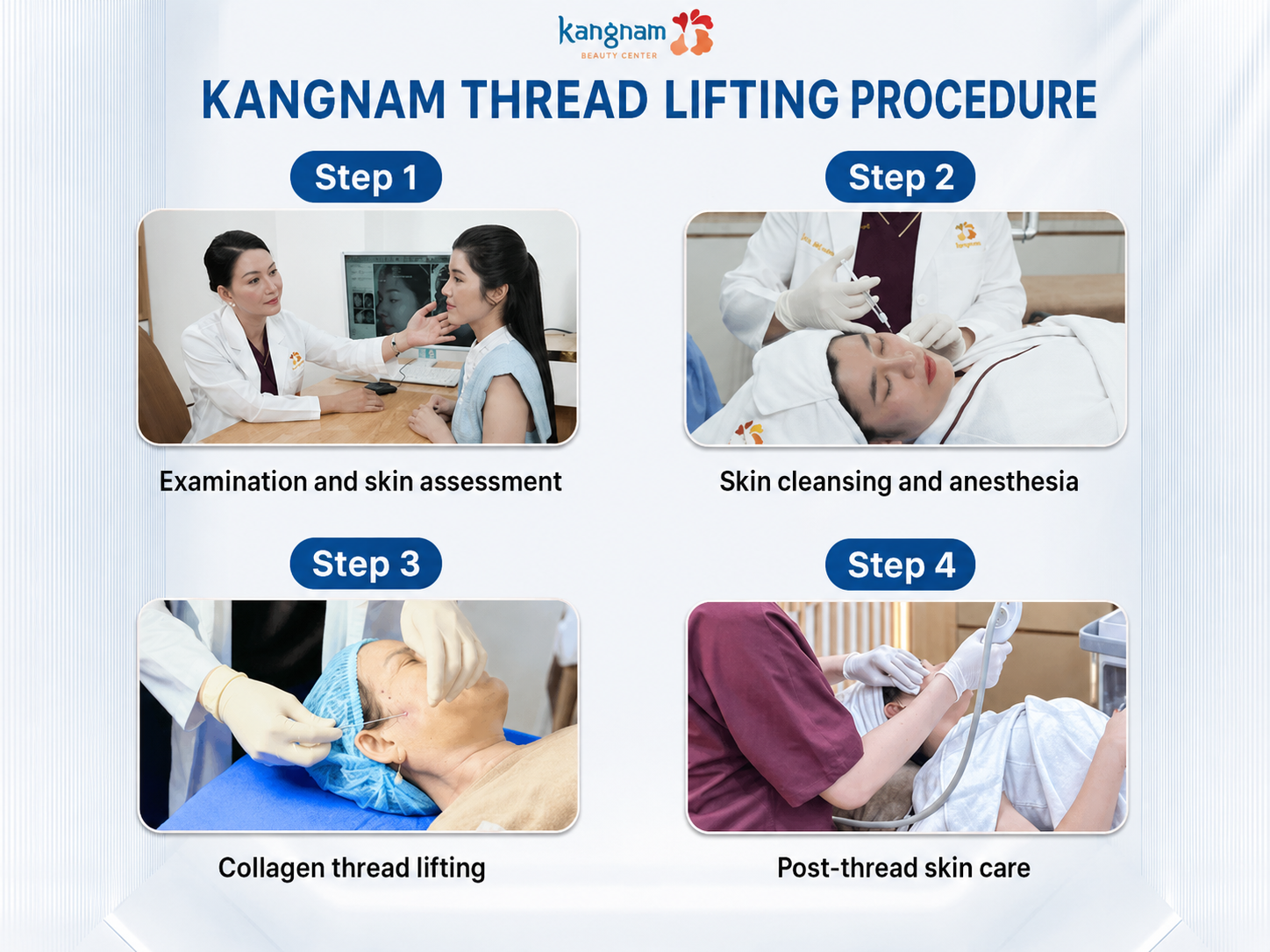
The facial thread-lifting procedure at Kangnam
The following is the listed price schedule for X-Line thread-lifting services:
| Service | Cost (USD) |
| X-Line Bio Young thread lift | ~$593 |
| X-Line thread lift – Level 1 | ~$1,368 |
| X-Line Plus thread lift – Level 1 | ~$1,641 |
| X-Line thread lift – Level 2 | ~$1,915 |
| X-Line Plus thread lift – Level 2 | ~$2,188 |
| X-Line thread lift – Level 3 | ~$2,432 |
| X-Line Plus thread lift – Level 3 | ~$2,736 |
The USD figures in the original price table were mathematically incorrect and have therefore been removed. Currency conversions should be calculated using the exchange rate applicable on the date of consultation.
The final treatment cost may depend on:
Patients should confirm the current price and all included services directly with Kangnam before treatment.
Kangnam provides surgical and non-surgical aesthetic services for domestic and international patients.
Before choosing a facility, patients should verify that the treatment is performed in a licensed medical setting by a practitioner who is authorised and trained to perform thread-lifting procedures.
The result of a thread lift depends heavily on the doctor’s understanding of:
At Kangnam, the procedure is performed by medical practitioners experienced in dermatology or non-surgical aesthetic treatments.

Experienced doctors assess the skin and facial structure before treatment.
Thread-lifting procedures should be performed under clean or sterile conditions with traceable, appropriately labelled products.
Patients should request information about:
Claims that a specific product is “FDA-certified” should only be published when valid documentation identifies the exact product, manufacturer, indication, and regulatory authorisation. A general statement about an entire thread-lifting technique should not be used as proof of approval.
The thread placement pattern should be customised according to each patient’s facial anatomy and degree of sagging.
A properly planned procedure may help improve facial definition while limiting unnecessary tissue trauma. However, no technique can guarantee a complication-free outcome.
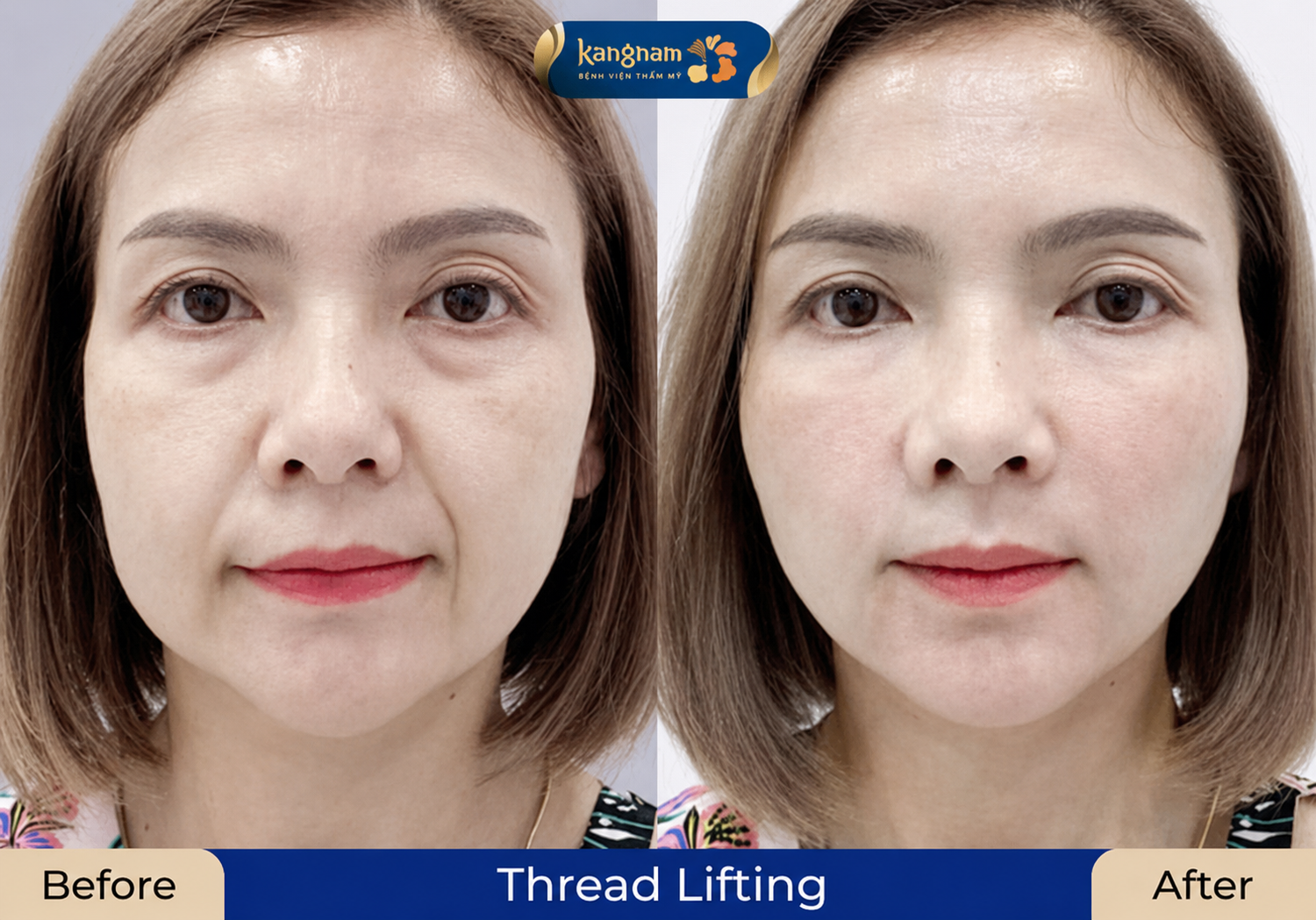
Visible improvement may be observed after swelling begins to subside.
Kangnam offers support services for overseas Vietnamese patients who are considering facial rejuvenation during a visit to Vietnam.
Depending on availability, these services may include:
Online consultations can provide preliminary guidance, but they cannot replace an in-person facial examination.
Patients may notice:
Results differ between patients and depend on age, skin elasticity, tissue thickness, facial anatomy, thread type, number of threads, insertion technique, and post-treatment care.
Testimonials and before-and-after photographs represent individual outcomes and should not be interpreted as a guarantee of identical results.
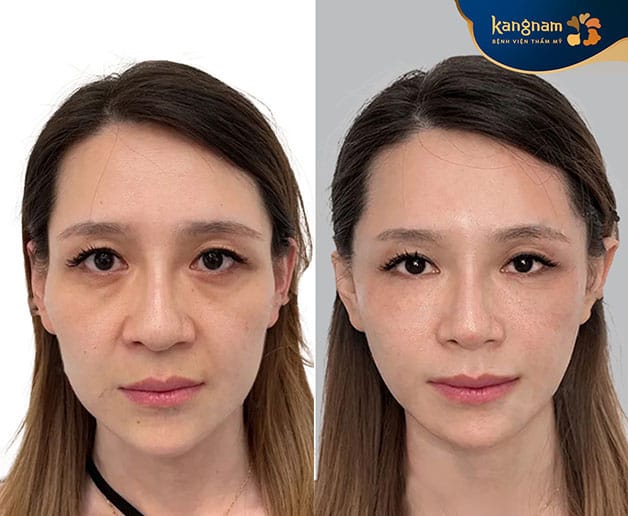
Overseas Vietnamese patients choose Kangnam for facial rejuvenation treatments.

Overseas Vietnamese patients choose Kangnam for facial rejuvenation treatments.
A thread lift may be performed safely in appropriately selected patients when approved or legally supplied products are used by a qualified medical practitioner.
However, it is inaccurate to describe the procedure as completely safe or free from complications.
Possible side effects and complications include:
Patients can review further information about thread-lift side effects before deciding whether to undergo the procedure.
Initial recovery commonly takes several days, although swelling, bruising, tightness, or mild asymmetry may last longer.
A general recovery timeline may include:
Patients should not assume that everyone can immediately resume all normal activities. Exercise, massage, dental treatment, and activities that involve wide facial movements may need to be limited temporarily.
Mild swelling after a thread lift is common. It occurs because the insertion process causes controlled tissue trauma and may affect small blood vessels.
Swelling generally improves gradually, but patients should contact their doctor if they experience:
These symptoms may require prompt medical assessment.
The effects of an absorbable thread lift are temporary.
Results may commonly last approximately 12–24 months, although some patients may experience a shorter or longer duration. Claims that all results last two to three years should be presented cautiously because longevity varies considerably.
Factors affecting longevity include:
Additional information about thread-based rejuvenation is available in Thread-Lift Skin Rejuvenation.
The X-Line thread lift is a minimally invasive facial rejuvenation procedure that may improve mild to moderate sagging, support facial tissues, and stimulate collagen remodelling.
It offers a shorter recovery period than facelift surgery, but it cannot remove substantial excess skin or provide permanent results. Swelling, bruising, asymmetry, infection, thread visibility, and other complications remain possible.
Patients should undergo an in-person assessment, choose a licensed medical facility, verify the origin of the threads, and have the procedure performed by a qualified practitioner with detailed knowledge of facial anatomy.
Overseas Vietnamese patients may submit photographs for a preliminary remote assessment before travelling, but final eligibility and the treatment plan must be confirmed through an in-person medical examination.